Hair care · Shopify
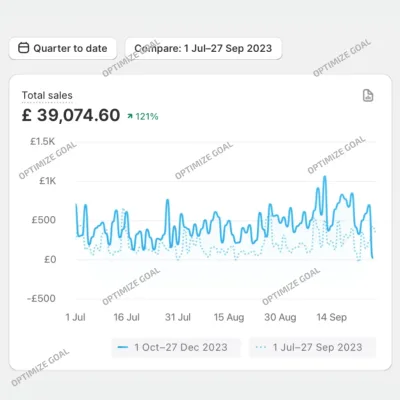
£5K to £39K in four months
Revenue had stalled. We fixed the site experience and launched UGC problem-solution ads — the quarter closed up 121% on the one before.
- 2.5x ROAS
- +121% QoQ

Book a free audit call and I will tell you which fix moves your numbers first.
Book a free auditShoppers hesitate on the product page, abandon the cart or stall at checkout, and every one is revenue you already paid to attract. I'm Aditya Singh: I find where you lose them, A/B test the fixes on live traffic and build the winners into your theme, for a flat $700 a month with Shopify apps worth $1,000 free. The audit is free, with findings in 48 hours.
The audit, the fixes, your ads, the testing and the monthly optimization, all done by me personally. No contract, no setup fee, and Shopify apps worth $1,000 on the house.
One flat fee. Cancel any month. You keep ownership of every ad account, pixel and dataset.
Get my free revenue-leak audit The audit call is free and the findings are yours to keep.I find exactly where your ads, tracking and store lose money, and put a number on it.
I make the changes myself: tracking, account structure, store and funnel. No to-do list handed back.
Campaigns built, launched and managed on the channels you spend on, with budget moved to what pays back.
Ad creative, offers and landing pages tested against a baseline. Winners scale, losers get cut.
Spend, tracking and conversion rate watched continuously, with a plain-English report every week.
Every month the winners get more budget and the next round of tests is lined up.
Shopify apps worth $1,000, free while you are a client.Every Optimize Goal Shopify app is yours at no extra cost. On another platform? The plan above is the same, and the apps simply do not apply.
Trusted by 50+ D2C brand founders


Shopify CRO is the work of raising the share of your visitors who buy, and I do it as one independent specialist, Aditya Singh: I find where the product page, cart and checkout lose shoppers, A/B test the fixes on live traffic and build the winners into your theme myself. It costs a flat $700 per month with no contract, and every Optimize Goal Shopify app is free while you're a client; ad spend and any testing-app subscription are paid by you separately.
The work is a loop, not a one-off project. Research comes first: Shopify analytics, funnel analysis, heatmaps, session recordings and a heuristic store review show where shoppers drop and what each leak costs. That evidence becomes ranked hypotheses. Each is designed, built into your theme and run as a controlled experiment against live traffic, then the winner ships for good, the loser is written up and the next test is lined up. Nothing changes on opinion alone.
Implemented means implemented. I write the variants, QA them on real phones and desktops, and move winners into your production theme, so you never receive a slide deck of recommendations to action yourself. Every test ends in a clear win or loss call and a short written note on what it was worth.
Conversion rate alone can mislead, because a store can discount its way to a higher rate and a worse business. Revenue per visitor is the headline metric since it only rises when the same traffic genuinely earns more, and I watch average order value so extra orders aren't bought with smaller baskets.
Shopify sets the boundaries. Native checkout limits what you can change, so outside Shopify Plus I work the levers that remain: trust cues, progress indicators, shipping and discount messaging and the path to cart. Plus stores can use checkout extensibility. A full redesign or re-platform is bigger than the monthly plan and belongs on the audit call.
I'll trace where sessions drop between product page, cart and checkout on mobile and desktop, then rank the leaks that deserve an A/B test first.
A 30-minute call with me. Written findings in 48 hours, yours to keep even if we never work together.
I fix tracking first, then account structure, then the funnel. Structural fixes usually land inside two weeks.
I run your campaigns and A/B test creative, offers and pages. Every test ends in a clear win or loss.
A monthly review scales what pays back and cuts what does not. Cancel any month.
Revenue had stalled. We fixed the site experience and launched UGC problem-solution ads — the quarter closed up 121% on the one before.
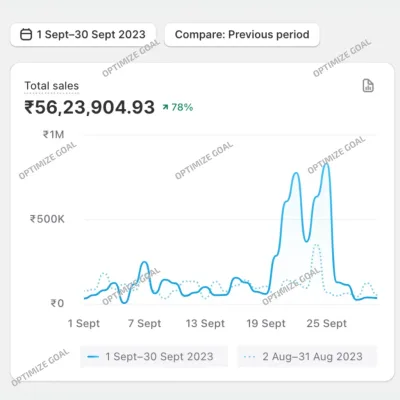
No funnel structure and a flat account. We rebuilt campaigns around a small set of offers and let the winners take the budget.
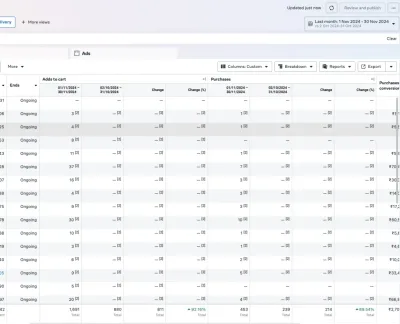
The brand could not scale without losing profitability. The first 30 days of the new funnel lifted adds to cart 92% and purchases 89%.
“A lot of custom development made it difficult to glean accurate insights through Google Analytics. They exceeded our expectations by finding a solution in half the time that other firms quoted us, and did so mostly independently, letting our team focus on the day-to-day.”
Anyone weighing an ecommerce CRO agency against a specialist is really comparing who does the work, what gets built and how much lock-in comes with it. Agency retainers commonly run $2,500 to $15,000 per month; here is how the two models differ.
| What to compare | Optimize Goal (Aditya Singh) | A typical CRO agency |
|---|---|---|
| Price | $700 per month, flat, with tests, theme work and reporting included | Commonly $2,500 to $15,000 per month before any testing-tool bill |
| Who does the work | Aditya Singh researches, designs, builds and QAs each test | Work is split across roles, and the person who pitched may not be in your store |
| What you receive | Variants built into your theme and winners shipped to production | Often recommendations or tests left running inside the testing tool |
| Speed | Findings in 48 hours; first fixes in place inside two weeks | Discovery phases commonly run for weeks before the first test |
| Lock-in | Month to month; every experiment and theme change stays yours | Multi-month minimums are common |
| Tool costs | Testing-app subscription paid by you directly to the vendor | Worth asking whether the tool is inside the fee or billed on top |
| Breadth | One specialist, so I take on 2–3 new brands a month and a rebuild is out of scope | More hands, which helps if you need a redesign built alongside the testing |
For Shopify and Shopify Plus brands that already get steady traffic and want more sales from it. The audit says whether A/B tests or research-led fixes should come first.
Get my free revenue-leak auditI look at the product page first, then the cart, then checkout, because that is where most Shopify conversions are decided. Imagery, copy, reviews, badges and buy-box layout usually do more for revenue than any header experiment, the cart leaks through shipping surprises and missing trust cues, and checkout, the most constrained step, yields to messaging and friction removal rather than redesign.
Most Shopify traffic is mobile and converts lower there, so I research and test it as its own discipline. App scripts are a common hidden leak too: an app injecting code into the product page or cart can slow mobile, and removing one is sometimes a bigger win than any layout change.
Every store leaks somewhere different, so I never arrive with a fixed list of fixes. I start quantitative: analytics and funnel analysis show which step loses the most sessions and what that step costs each month. Then qualitative: heatmaps, recordings and on-site surveys explain why shoppers hesitate there. Each hypothesis is scored for impact, confidence in the evidence and ease of build, an ICE-style score, so the highest-leverage page is tested first.
A finding I would act on has five parts. Observation: on mobile product pages, shoppers scroll past the buy box to the reviews and don't scroll back. Evidence: recordings repeat it and mobile add-to-cart trails desktop on the same template. Hypothesis: a rating beside the price and a sticky add-to-cart will lift mobile add-to-cart without shrinking baskets. Test: that change against the current page, mobile traffic only. Metric: add-to-cart as the early signal, revenue per visitor as the decision, AOV alongside. This is an illustration, not a client result.
A test only helps when the maths can settle. As a rule of thumb, around 30,000 monthly sessions, or about 1,000 conversions a month, lets tests reach statistical significance in weeks rather than quarters. Below that, slow underpowered tests mostly produce noise you then ship, so I lean on research-led fixes, tracking revenue per visitor before and after with seasonality allowed for. The audit tells you which side of that line you're on.
Tool choice follows the test. Shopify Rollouts, the platform's own feature for scheduling and comparing theme changes, suits simple template comparisons; Shoplift handles template tests; Intelligems is built for price and shipping-threshold tests; VWO and Optimizely cover broader experiments; Hotjar and Microsoft Clarity supply heatmaps and recordings, Clarity at no cost. Price tests need the most care because they touch margin and trust.
$700 per month, flat: the leak analysis, the A/B tests, the theme work to build and ship winners, monitoring, weekly reporting and monthly optimization, plus every Optimize Goal Shopify app free. Some agencies bill a retainer and then add a separate testing-tool invoice, so check what a quote includes before comparing it with Shopify CRO services priced any other way.
Not in the $700: your ad spend, the subscription for whichever testing app a test needs, and a redesign or migration. CRO compounds over 6 to 12 months as winners stack, which suits month to month with no contract. The work stays because it earns its place, and every experiment, insight and theme change remains yours.
A revenue-leak analysis of your store and analytics, A/B tests built into your theme, the product page, cart and mobile fixes that win, daily monitoring, weekly reporting and monthly optimization, all for one flat price. Every Optimize Goal Shopify app is included free too.
No. Ad spend is never part of the $700; you pay Meta, Google or any other platform directly. The same plan covers running your ads if you want that alongside the testing, since ads and product pages are judged on the same revenue.
No. Optimize Goal is the independent growth practice of Aditya Singh, one specialist rather than a firm handing work between roles. Research, test design, theme builds and reporting come from the same person, and the cost of that focus is capacity: I take on 2–3 new brands a month.
Closer to a consultant who also does the building. A Shopify conversion optimization agency usually splits research, design, development and reporting across roles, and consultant-style services often end with a recommendations document. I research the leaks, write the variants, build them into your theme and ship the winners myself, for a flat $700 a month, and every experiment stays yours.
Not as an agency, but yes to stores in the United States, which is one of the markets I work in, alongside the UK, Canada and Australia, and the plan, price and process are the same in each. For American checkouts I test the details that tend to matter locally, such as when sales tax and shipping cost first appear, which wallet buttons show and how plainly returns are explained.
I build them. Variants go into your theme, get checked on real devices and run as live tests, and winners move into production for good, so you are never left with a list to brief to a developer.
No contract and no setup fee. It runs month to month and you can cancel any month. Every experiment, insight and theme change stays yours either way, as do your analytics and ad accounts.
Written findings arrive within 48 hours of the audit call and the first fixes are usually in place inside two weeks. Compounding comes from stacking winners over 6 to 12 months. I never guarantee a specific lift before seeing your data, and an agency that does is a red flag.
All of them, for as long as you're a client; there is no separate app bill from me. They apply to Shopify stores only, which is what you have here. Together they are worth $1,000.
The 30-minute call is with me, and written findings follow within 48 hours. I read analytics for the steepest drop-off, watch recordings on those steps, check heatmaps on the busiest templates and test the product page, cart and checkout on a real phone. Bring your store URL; view access to analytics helps. You keep the ranked list of leaks whether or not you hire me.
If you want a guaranteed lift, a full redesign shipped on taste rather than tested in parts, or success measured by click-through rate. I also say so when your traffic is too thin for tests to settle, or when acquisition cost, not the store, is the bigger leak.
It shouldn't. I pick lightweight or Shopify-native testing tools, and winners are built into the theme with the test switched off, which removes the script that served them. A slower store would undo its own gains, since speed and mobile conversion move together.
Within limits. Native checkout restricts what can be changed, so I work on trust cues, progress indicators, shipping and discount messaging and the path from product page to cart. Shopify Plus stores can run real checkout experiments through checkout extensibility.
Yes, the work is the same under either spelling of the name. Currency, shipping expectations, trust signals and payment methods differ by market, so I test the local versions rather than importing another country's winning variants wholesale.
Thirty minutes with me, not a salesperson. You leave with the first three things I would fix — and you decide what happens next.