Hair care · Shopify
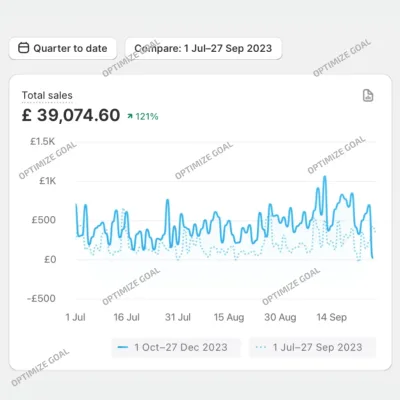
£5K to £39K in four months
Revenue had stalled. We fixed the site experience and launched UGC problem-solution ads — the quarter closed up 121% on the one before.
- 2.5x ROAS
- +121% QoQ

Book a free audit call and I will tell you which fix moves your numbers first.
Book a free auditMost store accounts waste budget on brand searches you would have won anyway, untrimmed search terms and tracking that teaches Smart Bidding the wrong lessons. I fix those leaks and run your Search and Performance Max campaigns for a flat $700 a month, with Google spend paid separately. The 30-minute audit is free, with written findings in 48 hours.
The audit, the fixes, your ads, the testing and the monthly optimization, all done by me personally. No contract, no setup fee, and Shopify apps worth $1,000 on the house.
One flat fee. Cancel any month. You keep ownership of every ad account, pixel and dataset.
Get my free revenue-leak audit The audit call is free and the findings are yours to keep.I find exactly where your ads, tracking and store lose money, and put a number on it.
I make the changes myself: tracking, account structure, store and funnel. No to-do list handed back.
Campaigns built, launched and managed on the channels you spend on, with budget moved to what pays back.
Ad creative, offers and landing pages tested against a baseline. Winners scale, losers get cut.
Spend, tracking and conversion rate watched continuously, with a plain-English report every week.
Every month the winners get more budget and the next round of tests is lined up.
Shopify apps worth $1,000, free while you are a client.Every Optimize Goal Shopify app is yours at no extra cost. On another platform? The plan above is the same, and the apps simply do not apply.
Trusted by 50+ D2C brand founders


An ecommerce Google Ads agency runs Search, Shopping and Performance Max for an online store; Optimize Goal is the independent practice of Aditya Singh, who personally finds where a store's Google spend is being wasted, fixes the structure and tracking behind it, runs the campaigns and keeps optimizing for a flat $700 per month, with the ad budget paid directly to Google.
Most ecommerce Google Ads accounts leak in four places. Performance Max buys searches for your own brand and returning customers, then takes credit for sales you would have made anyway. Search terms go unreviewed, so budget drains into queries that never convert. Smart Bidding learns from conversion data that is duplicated, soft or missing. And spend follows platform ROAS instead of margin, so products that cannot afford their clicks keep receiving them.
I start by measuring each leak, then fix them in order: conversion tracking first, because every bid decision reads it, followed by account structure, brand exclusions, negative keywords and budget allocation. After that I run the campaigns daily, A/B test ad copy, assets, offers and landing page messaging with clear win and loss calls, and use a monthly optimization cycle to move budget toward whatever the tests prove.
Results are reported against GA4 and your store's own revenue, alongside blended ROAS and MER (total ad spend against total store revenue), in a weekly written note. I watch spend and tracking daily, so a broken tag costs hours instead of weeks.
The plan costs $700 a month, flat and month to month, and the Optimize Goal Shopify apps come free while you are a client. Google ad spend and tool subscriptions are yours to pay directly, I do not guarantee a ROAS figure, and a store rebuild is a bigger job than the plan, so it is discussed on the audit call. The 30-minute call is free, with written findings in 48 hours.
I check your conversion tracking, brand leakage into Performance Max and search terms, then send written findings within 48 hours. The call is free.
A 30-minute call with me. Written findings in 48 hours, yours to keep even if we never work together.
I fix tracking first, then account structure, then the funnel. Structural fixes usually land inside two weeks.
I run your campaigns and A/B test creative, offers and pages. Every test ends in a clear win or loss.
A monthly review scales what pays back and cuts what does not. Cancel any month.
Revenue had stalled. We fixed the site experience and launched UGC problem-solution ads — the quarter closed up 121% on the one before.
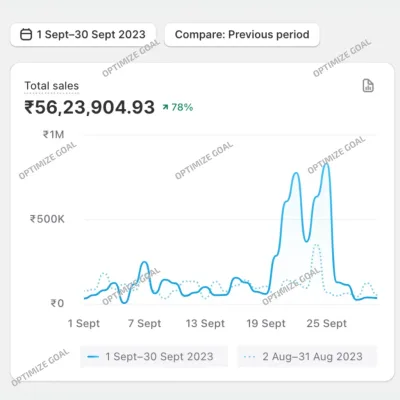
No funnel structure and a flat account. We rebuilt campaigns around a small set of offers and let the winners take the budget.
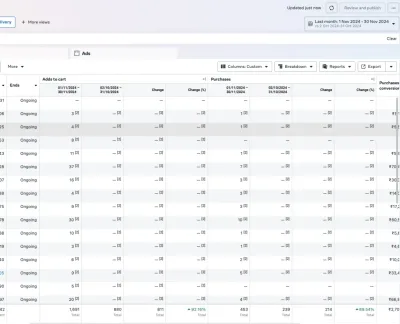
The brand could not scale without losing profitability. The first 30 days of the new funnel lifted adds to cart 92% and purchases 89%.
“A lot of custom development made it difficult to glean accurate insights through Google Analytics. They exceeded our expectations by finding a solution in half the time that other firms quoted us, and did so mostly independently, letting our team focus on the day-to-day.”
Many store owners weighing an ecommerce Google Ads agency are really choosing between outside help and one salaried hire. These are the points that decide it.
| What to compare | Optimize Goal (Aditya Singh) | A salaried in-house hire |
|---|---|---|
| Cost | $700 a month, flat; your Google budget is paid separately | A full-time salary plus recruiting, tools and ramp time before the first result |
| Skill coverage | Search, Shopping, Performance Max and conversion tracking handled by one specialist | One generalist expected to be strong at all of it, deep in one or two areas at best |
| Time to start | Free call, written findings in 48 hours, structural fixes inside 2 weeks | Weeks of recruiting, then a ramp on your account, catalog and stack |
| Reporting | ROAS tied to GA4 and store revenue, written up weekly | Often platform-reported ROAS, marked by the person being measured |
| If it stops working | Cancel any month; accounts and data stay in your name throughout | A performance process, a notice period and an account only one person understands |
| Capacity | I take on 2–3 new brands a month, so your account gets daily attention | The same working hours spread across more campaign types as you grow |
For growing online brands that already get traffic or spend on Google Ads. The audit says plainly whether the $700 plan is worth it for your store.
Get my free Google Ads auditPerformance Max buys across Search, Shopping, YouTube, Display and Discover from one budget and reports one ROAS. That number usually includes searches for your own brand name and returning customers, so the campaign looks excellent while total revenue stays flat. The fix is separation: brand terms are excluded from Performance Max and bought in their own Search campaign, where the cost of defending your name stays visible.
With brand out of the way, I read what Performance Max is actually doing: search term categories, channel splits and asset group results. Asset groups are split by product category and margin band instead of one group for the whole catalog, and a new customer acquisition goal tells Google a first order is worth more than a repeat one.
Start with brand search in its own campaign. Group non-brand Search by product category, and work negative keywords from search term data every week so budget stops draining into queries that never buy. Run Performance Max beside Search rather than instead of it, which keeps control of the queries where copy and bids matter. Give Smart Bidding a single purchase conversion action carrying real order value, and let budget follow product margin rather than the campaign leaderboard. Most accounts that disappoint trace back to one of those decisions, which is why the audit looks at structure before touching a bid.
Each system counts differently. Google Ads attributes by click and view, GA4 uses its own model, and the store admin counts what was actually paid. They will never match exactly, but the gap should be a band you can explain. A wide or growing gap usually means conversion tracking is broken or duplicated, and Smart Bidding is learning from it.
I fix the signal with enhanced conversions and server-side tagging so purchases survive browser restrictions and ad blockers, agree the acceptable band, document where each number comes from and report against store revenue. If you already use Triple Whale, I reconcile to it too; that subscription stays yours to pay.
Agency retainers commonly run $2,500 to $15,000 per month, or 10 to 20% of ad spend, before the budget that goes to Google. Google Ads agency pricing usually takes one of two shapes: a fixed fee or a percentage of spend. A percentage grows with your budget, which can reward pushing spend an account cannot profitably absorb. A fixed fee does not.
Mine is $700 a month flat. It covers the leak analysis, fixes, campaign management, testing, monitoring and monthly optimization, while your ad spend and any tool subscriptions sit outside it. Because the price does not move with spend, the audit can say plainly whether Google deserves more of your budget yet.
A revenue-leak analysis of your account, tracking and store; the fixes; running Search, Shopping and Performance Max; A/B testing; daily monitoring with a weekly written report; and a monthly optimization cycle. Aditya Singh does it all personally. There is no setup fee, and the Optimize Goal Shopify apps come free on top.
No. Google bills your ad budget to your own account, so it never passes through me, and it is separate from the $700. The same goes for tool subscriptions like Triple Whale. What you pay me for is the analysis, fixes, management, testing and reporting.
No, and the difference is concrete. Optimize Goal is one independent specialist, Aditya Singh, not a firm with departments. The person you speak to on the audit call is the person in your account, and nothing is passed down to a junior. The trade-off is capacity: one person cannot run dozens of accounts, so I take on 2–3 new brands a month.
The two overlap heavily, because Shopping and Performance Max both read the product feed in Merchant Center and sit in the same Google Ads account. The difference is where the work starts: a search-led setup begins with keywords and bids, a Shopping-led one with the feed. I run both from one seat, so Search structure, feed fixes and Performance Max exclusions are decided together instead of by two suppliers who each defend their own report. The feed side gets its own depth on the Google Shopping page of this site.
Aditya Singh, personally. That covers the daily check on spend and tracking, search term reviews, budget decisions, test design and the weekly report.
No contract. The plan runs month to month with no setup fee, and you can cancel in any month. Your Google Ads, Merchant Center and GA4 accounts stay in your name with full admin access for you, so leaving takes no migration.
Written findings arrive within 48 hours of the audit call. Tracking and structural fixes are usually in place inside two weeks and show up in the numbers soon after, since they change what Smart Bidding learns from. Expect profitable winners between days 30 and 60 and a clear scale plan by day 90. I will not promise a #1 position or an exact ROAS.
Yes, for as long as you are a client. They are included in the $700 rather than billed separately, and they apply to Shopify stores only. If your store runs on another platform, the Google Ads work and the price stay the same without them. Together they are worth $1,000.
A 30-minute call with Aditya Singh, followed by written findings within 48 hours. I review your conversion actions, how much Performance Max spends on brand, your search terms, and how far Google Ads, GA4 and store revenue sit apart. Read access to your accounts and a rough gross margin sharpen the findings. You keep them whether or not you hire me.
If you want a guaranteed #1 position or an exact ROAS promised in advance, if your product pages or checkout cannot convert yet and you want spend pushed anyway, or if you need a store rebuild, which is bigger than this plan. A product nobody searches for yet is also a poor fit for Google, because Meta or YouTube has to build that demand first.
Brand terms are excluded and bought in a separate Search campaign, asset groups are split by category and margin band, and every week I report search term categories, channel splits and asset group results. Where it helps, a feed-only test isolates how Shopping inventory performs on its own.
For most stores, yes. Google reaches people who are already searching for a product, so once the feed, tracking and landing pages work it tends to convert better than cold social traffic. It fits less well for a new category nobody searches yet, and the audit tells you which situation yours is.
Ask who is in the account daily and whether you meet them before signing, whether brand traffic is kept out of Performance Max, whether ROAS is reported against store revenue or Google's own column, and who owns the account if you leave. The best ecommerce Google Ads agency answers each plainly, and a guaranteed position or ROAS is a reason to walk away.
They move the work from picking keywords and bids to supplying good inputs. Performance Max already chooses placements, and AI Max for Search adds broad-match-style query matching and generated ad text to Search. What stays in my hands is the data the automation reads: conversion values tied to revenue or profit, a new customer goal, a clean feed and exclusions. AI Max is tested against a control, not switched on account-wide.
Thirty minutes with me, not a salesperson. You leave with the first three things I would fix — and you decide what happens next.