Hair care · Shopify
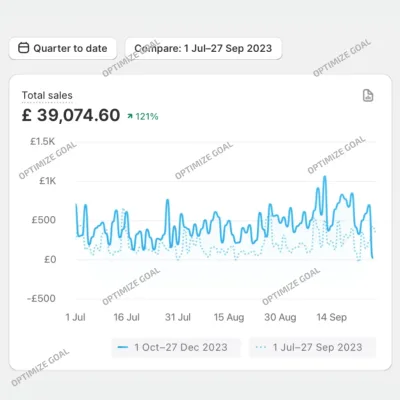
£5K to £39K in four months
Revenue had stalled. We fixed the site experience and launched UGC problem-solution ads — the quarter closed up 121% on the one before.
- 2.5x ROAS
- +121% QoQ

Book a free audit call and we will tell you which lever moves your numbers first.
Book a free auditPaid media, performance creative, CRO and tracking run as one system for DTC brands, optimized to blended ROAS, CAC and contribution margin — the numbers your bank account agrees with. Month to month, no lock-in, and you keep every account. Book the free audit call and within 48 hours you get a channel-by-channel read on where your ad spend is leaking.
30 minutes · With the senior buyer who would run your account · Findings in 48 hours
Trusted by 50+ D2C brand founders


An ecommerce performance marketing agency is a paid-media team that runs an online store’s advertising across Meta, Google and TikTok and is judged on the revenue and margin those ads produce, not on clicks, impressions or platform-reported ROAS.
Optimize Goal is an ecommerce performance marketing agency for DTC brands in the US, UK and other English-speaking markets. We run paid social, Google and Shopping, and TikTok, back them with in-house performance creative and CRO, and report blended ROAS tied to real revenue rather than platform-inflated numbers. Every account is run by a senior media buyer — the person you meet on the audit call is the person in the account. We work month to month with no lock-in, and your ad accounts, pixels and data stay yours.
The word “performance” is doing real work here. So what is a performance marketing agency, once the sales language is stripped out? A traditional agency sells activity: campaigns launched, impressions bought, a monthly deck. A performance agency sells an outcome and accepts a number it can be held to. Search performance marketing ecommerce and every result on page one promises exactly that, so the question worth asking is which number they report. If the dashboard says 4x and the bank account disagrees, the account is being optimized against a figure that does not exist.
What does a performance marketing agency do all week? The job splits into four parts: media buying, creative, measurement and conversion. Media buying decides where the next dollar goes. Creative decides whether it works — on Meta, creative is the targeting. Measurement decides whether you can tell. Conversion decides how much of the traffic you already paid for turns into an order. Agencies that own only the first part hand you a scaling problem the moment CPMs move. We run all four, which is why performance marketing services for ecommerce brands should be scoped as a system, not a channel.
This is not the right service for every store. As a D2C performance marketing agency, we typically partner with ecommerce brands spending between $10k and $500k per month on paid media, and we take on 2–3 new partners a month so senior time is not spread thin. If you sit below that spend, the free audit will usually tell you to fix tracking and offer economics before hiring anyone to manage media. We would rather say that on the call than sell a retainer that cannot pay for itself.
We'd reconcile what Meta, Google and GA4 claim against real store revenue, check your tracking, and show which channel has actually earned the next dollar.
Revenue had stalled. We fixed the site experience and launched UGC problem-solution ads — the quarter closed up 121% on the one before.
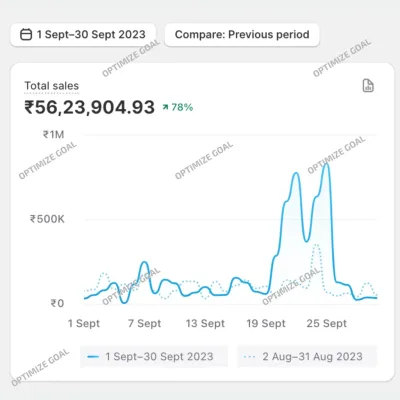
No funnel structure and a flat account. We rebuilt campaigns around a small set of offers and let the winners take the budget.
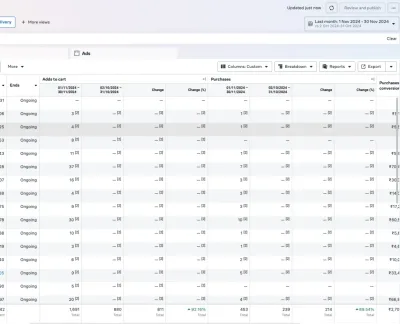
The brand could not scale without losing profitability. The first 30 days of the new funnel lifted adds to cart 92% and purchases 89%.
“A lot of custom development made it difficult to glean accurate insights through Google Analytics. They exceeded our expectations by finding a solution in half the time that other firms quoted us, and did so mostly independently, letting our team focus on the day-to-day.”
A performance marketing agency is a team that runs paid media (Meta, Google, TikTok) on a pay-for-results basis, optimizing to revenue and ROAS rather than clicks or impressions. Optimize Goal is a performance marketing agency for DTC ecommerce brands across the US, UK, and beyond: we run paid social, Google, and TikTok, back it with in-house performance creative and CRO, and report blended ROAS tied to real revenue, not platform-inflated numbers.
Your account is run by a senior media buyer, never handed off to a junior.
We optimize for blended ROAS and new-customer revenue, not vanity clicks.
An in-house studio feeds your ads with fresh, tested creative every week.
Your ad accounts, pixels, and data stay yours, always. Plus a live dashboard tying spend to real revenue.
One senior team running every paid channel against a single goal: profitable, trackable revenue for your store.
Full-funnel prospecting and retargeting on Facebook and Instagram, built around creative that converts cold traffic into buyers.
Search, Performance Max, and Shopping campaigns that capture high-intent demand and feed your product catalog.
Native, hook-driven video ads that reach new audiences and drive first-purchase revenue at a profitable CPA.
A creative engine of statics, UGC, and video, scripted and tested weekly so your winning ads never run dry.
Klaviyo flows and campaigns that turn first-time buyers into repeat revenue and grow lifetime value.
Server-side tracking and on-store A/B tests that fix attribution and lift the conversion rate your ads pay for.
Meta Business and Google Partner, running to platform best practices.
We optimize to blended ROAS and CAC, not in-platform vanity numbers.
We work in Klaviyo, Triple Whale, Northbeam, TikTok, and your wider stack.
Paid ads bring the traffic. Email and SMS, CRO, and retention make sure it converts and comes back, the full funnel a modern performance marketing agency should own.
Klaviyo flows and campaigns that turn first-time buyers into repeat revenue.
Post-purchase flows and audiences that grow lifetime value, not just first orders.
On-store A/B testing and landing pages so more of your paid traffic converts to sales.
Server-side tracking and blended reporting so you know which channel really drives revenue.
We audit your ad accounts, store, and tracking, then show you exactly where revenue is leaking and the size of the opportunity, usually within 48 hours.
You get a channel plan, creative angles, and a spend-to-revenue forecast before a single dollar is committed.
We launch campaigns and run structured creative and audience tests to find profitable winners fast.
We scale what works, kill what doesn’t, and report blended ROAS tied to real revenue every week.
Apparel brand, scaled spend from $40k to $180k/mo
Supplements brand, Meta + Google rebuild
Beauty brand, TikTok + UGC creative engine
Home goods brand, landing-page CRO program
Jewelry brand, Performance Max + Shopping
Food & bev brand, retargeting + retention
We run the full paid mix and weight budget toward wherever your store can scale profitably, all tied back to blended ROAS.
Facebook and Instagram prospecting and retargeting, built around creative that converts cold traffic.
Search, Performance Max, and Shopping that capture high-intent demand and feed your catalog.
Hook-driven native video that reaches new audiences and drives first-purchase revenue.
Klaviyo flows and campaigns that turn first-time buyers into repeat, higher-LTV customers.
Statics, UGC, and video scripted and tested weekly so your winning ads never run dry.
Server-side tracking and blended reporting so you know which channel actually drives revenue.
Deep experience across the categories that win in ecommerce, so your strategy starts with proven category data.
Most full-funnel retainers run $2,500 to $15,000 per month depending on spend and channels. You always get a clear scope before anything starts.
One core channel (Meta or Google) managed end to end, with creative and reporting.
Paid social, Google, and TikTok run together against one blended ROAS goal.
Full paid media plus email/SMS, CRO, and creative for brands scaling fast.
One transparent monthly fee. We scale spend only when the numbers justify it.
This is the honest performance marketing agency vs in-house comparison for a brand under roughly $10M in revenue. Below that line, one in-house hire is stretched across every channel, tool and creative brief at once, and the weakest of those jobs sets your ceiling.
| What to compare | Agency (Optimize Goal) | In-house team |
|---|---|---|
| Cost to stand up | One monthly fee, $2,500 to $15,000 for full-funnel management, with a scope agreed first | A four-person in-house team costs $300k+ a year in salary before tools and ad spend |
| Time to productive | Audit in 48 hours, restructure and creative testing running inside the first 30 days | Months to hire, onboard and ramp before the first structural change lands |
| Creative volume | In-house studio scripting and testing statics, UGC and video every week | One generalist writing briefs between reporting, hiring and platform admin |
| Channel coverage | Meta, Google, Shopping, PMax, TikTok and Klaviyo run by specialists against one target | One person covering every channel, so the weakest channel sets the ceiling |
| Attribution and tracking | Server-side tracking, GA4 and blended reporting built, verified and maintained for you | Tracking usually sits with a developer whose backlog belongs to someone else |
| Risk when someone leaves | Bench depth behind the account, so the work and the account history continue | Account knowledge walks out with the hire and the search starts over |
| What you keep | You own the ad accounts, pixels and data, month to month, with no lock-in | You own everything, plus the payroll, the tooling bill and the ramp risk |
For DTC and ecommerce brands spending $10k to $500k a month on paid media. Below that, we will tell you what to fix before you hire anyone.
Get my free performance auditThree things stall a paid account, and none of them is budget. The first is creative. On Meta the audience is the algorithm’s job and the hook is yours, so a store running two ad concepts a month runs out of new buyers to reach long before it runs out of budget. Frequency climbs, CPMs climb with it, and the account looks broken when it is simply out of things to say. The fix is volume and structure: angles tested on a schedule, with win and loss calls made against a fixed baseline.
The second is measurement. Since the iOS privacy changes, in-platform ROAS overstates results, and every platform claims the same order as its own. If Meta, Google, GA4 and Shopify all report different revenue, nobody can say which channel has earned the next dollar. We fix that before scaling spend: server-side tagging, Meta CAPI, GA4 configured to spec, and blended reporting in a tool like Triple Whale or Northbeam. Decisions then run on one number instead of four that disagree.
The third is the store itself. Paid media buys a session; the product page and the checkout decide whether it becomes an order. A store converting below its category norm is quietly taxing every ad dollar, and no bid strategy will out-run that. UK founders searching for ecommerce optimisation and US founders searching for optimization are asking the same question, and the answer is the same: fix the landing experience, then scale the media. That is why CRO sits inside the retainer instead of being sold as a separate project.
A performance marketing agency for ecommerce should own every channel that touches the purchase, not only the one it is best at selling. We run Meta prospecting and retargeting across Facebook and Instagram, Google Search, Shopping and Performance Max, and TikTok for hook-driven native video. Budget is weighted toward wherever your store can scale profitably that month, and that changes as CPMs, seasonality and inventory change. One team runs all of it against a single blended target, so no channel takes credit for revenue another channel created.
A performance creative agency for ecommerce is really a testing operation with a studio attached. Ours scripts and produces statics, UGC and short-form video in house, then tests new concepts weekly so winners keep scaling and losers are cut early. Creative is briefed from account data: the objections showing up in comments, the angles that survived last month, the products with enough margin to carry the spend. That loop is what keeps a profitable account profitable when the current winner fatigues.
Paid ads bring the traffic. Klaviyo email and SMS, landing-page CRO and post-purchase flows decide what it is worth. First orders rarely pay back on their own once CPMs rise, so retention is usually where the margin comes from. Full-funnel e commerce performance marketing connects those pieces: one strategy, one measurement layer, one weekly report. Whether you are hiring an e-commerce performance agency or a WooCommerce performance agency, the scoping question is identical — who owns the funnel after the click?
Performance marketing for ecommerce lives or dies on which metric sets the budget. MER — media efficiency ratio — is total revenue divided by total ad spend across every channel. Platform ROAS is revenue a single platform claims, counted inside its own attribution window, which is why the platforms together often report more orders than you actually shipped. We use blended ROAS and MER for scale decisions and platform numbers only for in-account diagnosis, because the first pair matches your bank statement and the second does not.
Contribution margin is what is left after COGS, shipping, payment fees and ad spend — the number that decides whether growth is worth having. Performance marketing agencies focused on contribution margin will ask for your unit economics on the first call, because a 3x ROAS on a thin-margin product can lose money while a 2x on a high-margin one makes it. We build those margin figures into the reporting, so budget moves are argued on profit per order rather than revenue per click.
CAC and payback finish the picture. New-customer CAC tells you what growth costs, LTV and repeat-purchase rate tell you what it is worth, and CAC payback tells you how long your cash is tied up before it comes back. A healthy LTV to CAC ratio is what lets you outbid competitors who are only watching platform ROAS. All of it lands in a weekly written report and a live dashboard alongside blended ROAS and new-customer revenue, so there is nothing to reconstruct at month end.
Every agency on a shortlist calls itself the best performance marketing agency for ecommerce, so judge the reporting before the pitch. Ask to see a real weekly report with the client's name removed. If it leads with platform ROAS and never mentions blended ROAS, MER or contribution margin, the agency is optimizing to the scoreboard the platforms keep for themselves. A performance marketing agency with attribution it can defend will show how its revenue figure reconciles with your Shopify or WooCommerce orders, and what it does when Meta and Google both claim the same sale. If nobody on the call can explain that plainly, the reporting will not survive your finance team.
Then read the performance marketing agency case studies with the budget in view. A result with no starting spend, channel mix or product category attached is a headline, not evidence. The ones on this page name the category and the channels, and the budget where it matters: an apparel brand that scaled spend from $40k to $180k a month, a supplements brand after a Meta and Google rebuild, a beauty brand running on a TikTok and UGC creative engine. Ask who writes the ads and how often new concepts ship, because creative volume decides how long a winner lasts. A generalist digital performance marketing agency running software lead generation and skincare from one playbook will struggle on both counts.
Last, compare the commercial terms, because performance marketing agency cost is only half the picture. A full-funnel retainer between $2,500 and $15,000 a month is normal; what varies is what it buys and how easily you can leave. Check who owns the ad accounts, pixels and creative, whether the contract runs month to month, and whether the agency would ever tell you your spend is too low to justify it. Choose the one that asks for your unit economics before it quotes a target. The free audit call is a fair test of all of this: bring your numbers and judge us by the questions we ask.
An ecommerce performance marketing agency charges a management fee separate from your ad budget. Most full-funnel retainers run $2,500 to $15,000 per month, or 10 to 20% of ad spend, depending on channels and scope. Ours covers media buying, creative production, tracking and reporting in one transparent monthly fee, and you get a clear scope before anything starts. We scale budget only when the numbers justify it, not because a bigger budget pays us more.
Yes, when three conditions hold: tracking can tell you which spend produced which orders, the product carries enough margin to pay for acquisition, and creative is refreshed often enough to keep reaching new buyers. When one of those is missing, performance marketing tends to look healthy in the platform dashboard while contribution margin quietly shrinks. That is why our audit checks tracking and unit economics before it looks at media. If your economics do not support paid acquisition yet, we will say so on the call rather than sell you a retainer.
For most DTC ecommerce brands under roughly $10M in revenue, an agency wins on speed and coverage. One in-house hire is stretched across Meta, Google, creative and tracking, and takes months to ramp. A four-person in-house team costs $300k+ a year in salary alone. An agency gives you a senior media buyer, an in-house creative team and full tracking for less than a single senior salary, and is productive in weeks. Past that scale, a hybrid usually beats either option.
Performance marketing agency fees come in two shapes, a flat retainer or a percentage of ad spend, and we charge the first: one transparent monthly fee, agreed against a defined scope before work starts. Percentage-of-spend pricing rewards an agency for spending more of your money, which is the opposite of what a profit-first mandate should pay for. Industry retainers commonly run $2,500 to $15,000 per month, or 10 to 20% of spend; we quote the flat number instead, so your cost is predictable and budget only rises when the margin supports it.
No, and it is worth knowing why before you hire one that does. A pay-for-performance marketing agency takes a share of revenue or a fee per order, which sounds aligned until you ask whose attribution counts the orders. Platform-reported conversions overstate results, so the agency gets paid for the same double-counting you are trying to escape, and for chasing cheap returning customers over new ones. We charge one flat monthly fee, work month to month with no lock-in, and let blended ROAS and contribution margin decide whether we keep the account.
MER, or media efficiency ratio, is your total revenue divided by your total ad spend across every channel. ROAS is revenue a single ad platform attributes to itself using its own attribution window, which is why the platforms together often claim more orders than you actually received. We use blended ROAS and MER to make budget and scale decisions, and platform ROAS only to diagnose what is happening inside an individual account.
A good one optimizes the numbers your bank statement agrees with. Ours are blended ROAS and MER for scale decisions, new-customer CAC and CAC payback for the cost of growth, and contribution margin for whether that growth is worth having, all reported weekly alongside new-customer revenue. Platform ROAS, click-through rate, CPM and frequency still matter, but as diagnostic inputs inside an account rather than as results. If an agency's report leads with impressions, clicks or platform ROAS, it is optimizing activity rather than performance.
It depends on your margin, which is why we will not quote a benchmark. Breakeven ROAS is one divided by the share of each order left after COGS, shipping and payment fees: the thinner that share, the higher the ROAS you need just to stand still, so a figure that is profitable for one store loses money for another. We work yours out on the audit call, set the blended target above it, and judge new-customer campaigns separately, because first orders can run below breakeven when repeat purchases pay them back.
PPC names a pricing model: you pay per click, most often on Google and Microsoft Bing search ads. Performance marketing names an accountability model: the work is judged on orders, revenue and margin, whichever channel produces them. A PPC-only agency can report a falling cost per click while the account loses money; a performance agency is held to blended ROAS, CAC and contribution margin across Meta, Google, TikTok and email together. Most ecommerce performance programs include PPC, but paid social, creative, tracking and conversion work decide just as much of the result.
We typically partner with ecommerce and D2C brands spending between $10k and $500k per month on paid media. Below that range, the free audit will usually recommend a leaner setup — fixing tracking, offer and landing pages first — rather than a management retainer, because a retainer has to pay for itself out of the margin it creates. We would rather tell you that on the audit call than take the engagement anyway.
Ecommerce performance marketing usually moves in stages. You get audit findings within 48 hours, and tracking and structural fixes normally show up in the numbers inside the first two weeks. Expect account restructure and creative testing in the first 30 days, the first profitable winners between days 30 and 60, and a clear scale plan by day 90. We never promise a specific ROAS — any agency guaranteeing an exact number is a red flag.
Most of our clients are DTC and Shopify brands, but the media buying, creative and measurement work is platform-agnostic. If you are looking for a WooCommerce performance agency, the difference is in the tracking layer rather than the strategy: WooCommerce needs its own server-side setup and data-layer work before the revenue numbers can be trusted. We scope that during the audit so you know exactly what has to be fixed before spend scales.
Not by a fixed formula. Budget follows payback: a channel gets more spend while its marginal return on a blended basis stays above target, and the next dollar goes elsewhere once it drops. In practice Meta tends to carry new-customer volume, Google Search and Shopping capture demand that already exists, TikTok earns its share when the creative works there, and Klaviyo email and SMS keep the first order from being the last. The mix moves with CPMs, seasonality and inventory, so we review it weekly rather than fixing it once in a plan.
Often, but not by default. Performance Max works best for stores with a clean product feed, reliable conversion tracking and enough purchase volume for the algorithm to learn from. Left unsupervised, it tends to drift toward branded searches and returning visitors, then report revenue you would have had anyway. We run it alongside standard Search and Shopping, with brand exclusions and the feed segmented by margin, and judge it on blended ROAS and new-customer revenue rather than the ROAS it reports about itself. The audit shows which case your account is in.
Both. As a performance creative agency for ecommerce, we script and produce statics, UGC and short-form video in house, then test new concepts every week so your winning ads never run dry. Creative is briefed from account data: objections in comments, angles that survived last month, products with the margin to carry the spend. Media buying without a creative engine stalls the moment the current winner fatigues.
We set up server-side tracking, Meta CAPI and GA4 to spec, then report blended ROAS tied to actual store revenue rather than in-platform conversions alone. Where it helps, we work in Triple Whale or Northbeam so one blended view replaces four dashboards that disagree. You get a weekly written report and a live dashboard you can open any time, so nothing has to be reconstructed at the end of the month.
No. We work month to month with no lock-in and no large upfront fee, and you keep full ownership of your ad accounts, pixels and data. We only take on 2–3 new partners a month, which is how senior time stays on the accounts we already have. We would rather earn the next month with results than hold it with a contract you cannot leave.
A dedicated senior media buyer runs your account — the person you meet on the audit call is the person in the account every day. No handoff to a junior, no rotating account manager, no shared inbox. They are backed by the in-house creative team and by whoever owns your tracking, so requests do not queue behind one stretched generalist. You also get a live dashboard and a weekly written report.
It is a 30-minute call with the senior media buyer who would run your account, not a salesperson. If you can, share view access to your ad accounts beforehand, plus a rough idea of margin per order; nothing needs to be tidied first. We look at tracking, account structure, creative cadence and how platform revenue compares with store revenue, then send findings, usually within 48 hours. They are yours to keep whether or not you hire us, and if the honest answer is that your spend is too low for an agency, we will tell you.
Yes. We work with DTC ecommerce brands across the US, UK and other English-speaking markets. UK founders tend to search for ecommerce optimisation while US founders search for optimization, but the work is identical: the same channels, the same margin maths, the same blended reporting. Currency, VAT treatment and shipping economics get built into the margin model so the profit figures are correct for your market.
Yes. We focus on DTC ecommerce and Shopify brands, so our creative, tracking, and landing-page playbooks are built for online stores.
We set up server-side tracking and report blended ROAS tied to actual revenue, not just in-platform numbers that overstate results.
Yes. Our in-house team produces statics, UGC, and video, and tests new creative every week so winners keep scaling.
We run Meta (Facebook and Instagram), Google and Shopping, and TikTok, then weight the mix toward wherever your store can scale profitably.
Yes. Beyond paid ads we run Klaviyo email and SMS, conversion rate optimization, and creative, so the whole funnel works together.
Yes. We work with DTC ecommerce and Shopify brands across the US, UK, and other English-speaking markets.
Senior buyers on every account, weekly in-house creative testing, profit-first optimization, and transparent reporting, with no lock-in contracts.
An agency, for most brands under ~$10M in revenue. One in-house hire is stretched across every channel and tool and takes months to ramp; an agency gives you a senior buyer, an in-house creative team, and full tracking for less than a single senior salary, and is productive in weeks.
We set up server-side tracking and use blended reporting (and tools like Triple Whale or Northbeam) so your numbers reflect real revenue, not platform-inflated ROAS.
You work with a dedicated senior media buyer and a live dashboard, with a weekly written report so you always know how spend is performing.
Thirty minutes with a senior strategist, not a salesperson. You leave with the first three things we would change — and you decide what happens next.