Hair care · Shopify
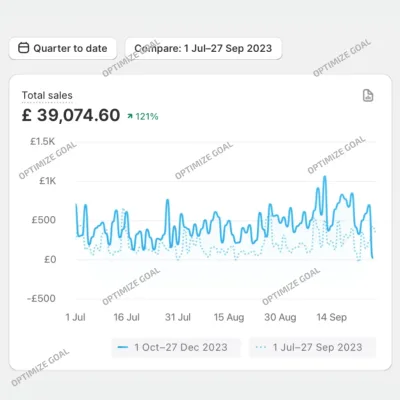
£5K to £39K in four months
Revenue had stalled. We fixed the site experience and launched UGC problem-solution ads — the quarter closed up 121% on the one before.
- 2.5x ROAS
- +121% QoQ

Book a free audit call and I will tell you which fix moves your numbers first.
Book a free auditAt Plus traffic, one silently broken checkout rule or a slow product page costs real money every day. I audit your checkout, tracking and mobile speed, fix what I find and run your ads for a flat $700 a month, with Shopify apps worth $1,000 free. The free 30-minute audit comes with written findings in 48 hours.
The audit, the fixes, your ads, the testing and the monthly optimization, all done by me personally. No contract, no setup fee, and Shopify apps worth $1,000 on the house.
One flat fee. Cancel any month. You keep ownership of every ad account, pixel and dataset.
Get my free revenue-leak audit The audit call is free and the findings are yours to keep.I find exactly where your ads, tracking and store lose money, and put a number on it.
I make the changes myself: tracking, account structure, store and funnel. No to-do list handed back.
Campaigns built, launched and managed on the channels you spend on, with budget moved to what pays back.
Ad creative, offers and landing pages tested against a baseline. Winners scale, losers get cut.
Spend, tracking and conversion rate watched continuously, with a plain-English report every week.
Every month the winners get more budget and the next round of tests is lined up.
Shopify apps worth $1,000, free while you are a client.Every Optimize Goal Shopify app is yours at no extra cost. On another platform? The plan above is the same, and the apps simply do not apply.
Trusted by 50+ D2C brand founders


Aditya Singh, working as an independent specialist, takes over the revenue-critical parts of a Shopify Plus store for $700 a month: checkout rules that stopped working when Scripts retired, tracking that misreports orders, and slow pages that waste paid traffic. The same plan covers running your ads, A/B testing, daily monitoring and monthly optimization, and every Optimize Goal Shopify app is free.
A typical Shopify Plus agency sells platform projects: checkout extensions, Functions, native B2B, expansion stores, ERP connectors and replatforms. Those are real builds and they are not what the monthly plan covers. I concentrate on the leaks inside a store that is already live, because Plus volume is high enough that a rule silently failing at checkout, or a product page that is slow on mobile, gets expensive quickly.
The urgent leak for many Plus stores is the end of Scripts. Legacy Shopify Scripts stopped executing on June 30, 2026, and checkout.liquid was retired in favor of checkout extensibility and Functions. A discount tier, shipping rule or post-purchase script that depended on them may have gone quiet without any error, so my first check is what your checkout did before and what it does today.
Where a lost rule can be restored with a native Shopify discount, shipping or checkout setting, or with a small Function, the fix is part of the plan. Where the replacement is a long list of bespoke rules, it is a build, the audit says so, and I give no price for it here. Tracking is the second job, because moving checkout onto extensions changes how pixels fire, and ad platforms bid on whatever they receive.
The $700 is flat and month to month, with no contract. Ad spend goes from your accounts to the platforms, and Shopify bills its own Plus platform fee, so neither sits inside the $700. For context, agency retainers commonly run $2,500 to $15,000 per month, or 10 to 20% of ad spend.
I compare what your checkout did before Scripts stopped with what it does now, then send written findings within 48 hours. The audit call is free and carries no obligation.
A 30-minute call with me. Written findings in 48 hours, yours to keep even if we never work together.
I fix tracking first, then account structure, then the funnel. Structural fixes usually land inside two weeks.
I run your campaigns and A/B test creative, offers and pages. Every test ends in a clear win or loss.
A monthly review scales what pays back and cuts what does not. Cancel any month.
Revenue had stalled. We fixed the site experience and launched UGC problem-solution ads — the quarter closed up 121% on the one before.
“A lot of custom development made it difficult to glean accurate insights through Google Analytics. They exceeded our expectations by finding a solution in half the time that other firms quoted us, and did so mostly independently, letting our team focus on the day-to-day.”
Plus brands usually weigh a retained outside firm against a full-time hire. I am a third option: one specialist on a monthly plan, aimed at fixes rather than a roadmap of builds. Here is how the in-house hire compares.
| What to compare | Optimize Goal (Aditya Singh) | In-house Plus developer |
|---|---|---|
| Cost | $700 per month, flat, plus ad spend you pay the platforms | A full salary and benefits, before tools and hiring time |
| Coverage | Checkout, tracking, store speed and the ads, all by one person | One developer who rarely also owns tracking, ad accounts and testing |
| Time to start | Findings within 48 hours of the audit call; structural fixes inside 2 weeks | Recruiting and onboarding before anyone touches your checkout |
| Lock-in | Month to month; cancel any month | Employment commitments that can outlast the problem |
| Ownership | Your store, ad accounts, pixels and data stay in your name | Also yours, though knowledge tends to sit in one person's head |
| Big builds | Scoped separately on the audit call, with no price quoted on this page | Where in-house earns its cost: a steady roadmap of platform work |
A Plus audit starts where the money moves, at checkout, and works outward. I establish what the store did before Scripts ended and what it does now, then every layer that feeds or reports on it: extensions, apps, storefront speed, markets, wholesale accounts and the systems connected behind the store. Each step ends with restore, retire or leave alone.
I ask for whatever remains of the old customizations: saved Script code, theme files and notes from the developer who wrote them. Each rule gets a one-line description of its intended behavior, such as a tiered discount, a hidden shipping rate or a free gift. The warning sign is a rule nobody can describe, or one described that no longer fires. The output is a restore-or-retire list ranked by revenue at stake, naming the native setting or small Function that would replace each rule.
A rule that works for a guest on desktop can fail for a logged-in buyer on a phone using an express payment button. I place orders across the paths your buyers actually use, covering stacked codes, gift cards, local pickup, subscriptions and wholesale accounts, and record expected against actual at each step. Typical findings are a discount that vanishes when a second code is added, or a shipping rate offered to the wrong cart. I fix the rule or flag it as a build.
I list every Function and checkout extension, noting whether an app supplies it or custom code does, and who can edit it. Then I feed each one awkward input: an empty cart note, a product missing a metafield, a country it was never written for. Failure here is quiet: a Function that does nothing, or an extension that breaks the layout on a small screen. I fix what is small and write up what is not, so the next change does not re-break it.
Checkout extensibility changed how tracking code reaches the checkout, so I check how each pixel now loads: through Shopify's customer events, through an app, or not at all. Then I compare purchases in GA4 and each ad platform with Shopify orders for the same period. The fault to expect is missing purchases, duplicated ones or revenue reported in the wrong currency. I correct the source, share one event ID across browser and server events, and confirm with a live order.
Plus stores collect apps because every team can install one. I group them by job and look for overlap: two upsell tools, two review widgets, a currency selector running beside Markets. For each I check what it loads on the storefront and at checkout, and what revenue or time it returns. Watch for duplicate scripts, a discount app fighting a native automatic discount, and an app nobody can name an owner for. The change is a keep, merge or remove list, and the call is yours.
I test the product, collection and landing templates on a throttled phone, then check field data in Search Console. A high-traffic store feels every flaw on every session, so I look at oversized hero media, render-blocking scripts, geo-location pop-ups and consent banners that shift the layout. Trouble shows up as a large first image arriving last, or a banner that makes the page jump. I resize and re-prioritize assets, defer non-critical scripts, and drop whatever the profile shows is not earning its weight.
If you sell through several markets, domains or expansion stores, I check how currency, language and price reach every pixel and feed. I look at whether a session survives a hop between domains, and whether each market's purchases land in the right GA4 stream and ad account. The giveaway is revenue reported in one currency while the order was placed in another, or a visit that restarts when a buyer crosses to another domain. I correct the configuration and note which reports are comparable.
Where B2B is switched on, I compare company accounts, catalogs, price lists and payment terms against what each buyer type actually sees, and ask whether wholesale purchases are polluting the conversion data your ads learn from. Then the connected systems: ERP, warehouse, loyalty, subscriptions. Red flags are a retail price shown to a wholesale login, or stock that syncs late and oversells. I fix settings and event mapping; rebuilding an integration is a project, scoped separately.
For Shopify Plus brands with real traffic or ad spend who suspect checkout, tracking or speed problems are costing sales. The audit says whether the plan is worth it.
Get my free revenue-leak auditQuite possibly, if the store relied on them. Legacy Scripts stopped executing on June 30, 2026, and checkout.liquid customizations went with the move to checkout extensibility. The failure is silent: a tiered discount just stops applying, a shipping rate stops hiding for certain carts, a post-purchase upsell stops appearing. Placing test orders through every path your buyers use is the only reliable way to find out.
I test guest, logged-in, stacked-discount, multi-currency and express-payment checkouts, plus wholesale buyers where they exist. Anything that no longer behaves as it used to goes on a restore-or-retire list ranked by revenue at stake. Simple rules return through native Shopify settings or small Functions as part of the plan, while a long list of bespoke rules is a project and the audit says so plainly.
Tracking gets checked in the same pass. Checkout events fire differently on extensibility, so a migration that overlooked them can leave GA4 and your ad platforms with missing or duplicate purchases. Wrong events mean wrong bids, which is a quiet way to waste ad budget.
"Shopify Plus development services" covers a lot of ground, so here is the exact boundary of mine. Inside the $700: restoring discount, shipping and payment rules that stopped when Scripts ended, using native settings or a small Function; checking checkout and purchase events against test orders; speed work on the templates paid traffic lands on; small Liquid changes to product, cart and collection pages; removing apps that cost more than they return; and the ads, A/B testing and monthly optimization wrapped around all of it. I do each piece myself, so a change and the reason for it sit in one weekly report.
Outside it: a replatform onto Plus, native B2B build-outs, expansion stores, ERP and warehouse connectors, bespoke checkout interfaces, a headless storefront and custom public apps. Those are not bad ideas. They need a staging process, a handover and often several people working at once, which one specialist on a flat monthly fee cannot staff in parallel. I also do not offer round-the-clock cover or an on-call rotation. If something on your roadmap belongs on this list, the audit call says so plainly and sets out the order in which I would do the fixes.
A simple test separates a fix from a build. If the change is a setting, one condition in a Function, or a template edit that can be reversed in minutes, it is a fix. If it needs data from another system, a new interface for the buyer, or a staging environment and a handover, it is a build. Borderline items, such as a single custom field at checkout, depend on which checkout features your plan and apps already use, so I treat each as a question rather than an assumption.
Largest Contentful Paint decides how much of each paid click turns into a viewed product page, and the loss scales with traffic. The usual culprits are oversized hero images, render-blocking JavaScript, apps that load scripts everywhere and fonts that hold text back. A high-volume store feels every one of them more, because they hit every session. Core Web Vitals also feed how the store ranks in search.
Peak days deserve their own watch. During flash sales and product drops I monitor spend, tracking and the checkout path daily, so a failing payment method or a broken event is caught the same day rather than in a monthly report. Shopify hosts the store, which leaves me the parts you control: theme weight, apps and third-party scripts.
Testing follows. Cheap experiments need a clean theme, so I run one A/B test at a time on the product page, cart or offer, call it as a win or a loss and carry the winner forward.
Anyone searching for a Shopify Plus marketing consultant or a Shopify Plus PPC agency is usually trying to solve one problem: the numbers on a Plus store come from more places than on a standard one. Checkout runs on extensions, purchases reach ad platforms through Shopify's event layer or a server connection instead of a pasted script, and one store may sell in several currencies across several domains. Ad platforms optimize toward whatever purchase signal they receive, so a quiet fault anywhere in that chain changes bidding for every campaign, however strong the creative is.
Markets and expansion stores add specific failure points. The currency on a purchase event has to match its value, or revenue is misreported. Each market needs a product feed whose price, currency and shipping agree with the storefront, or Merchant Center disapproves the product. Buyers who hop between domains need cross-domain measurement, otherwise one visit appears as separate sessions and the first click gets no credit. Local pricing rules and rounding can also make a product look cheaper on the storefront than in the feed, so I compare the two for each market before touching any bids. Campaign structure should follow how you actually sell, by market or language, instead of copying a single-store account.
Wholesale is the other trap. When company accounts buy in the same store as retail customers, their orders can feed the same conversion signal and teach Meta and Google to find more wholesale buyers than you wanted, so I separate that signal where the store allows it. On the paid side, the usual Plus priorities are protecting branded search, keeping Shopping and Performance Max fed by a clean catalog, and watching spend daily through drops. A consultant who only writes a plan leaves the execution to you; I run the accounts myself.
Plus earns its platform fee when a specific capability behind the tier is blocking revenue: checkout extensibility, Functions, native B2B with company accounts and price lists, higher API limits or expansion stores. If nothing like that applies, standard Shopify may serve you better, and I will say so on the audit call.
Replatforming from Adobe Commerce (formerly Magento), Salesforce Commerce Cloud or BigCommerce is a data and SEO project before it is a design one. Adobe Commerce hands you the whole codebase in exchange for owning hosting and upgrades. Commerce Cloud suits brands committed to Salesforce. BigCommerce is the nearest like-for-like hosted option. Most migration horror stories are redirect stories: every indexed URL needs a mapped 301, and Search Console should look the same the week after cutover.
Native B2B, expansion stores, ERP links and replatforms are bigger than a $700 monthly plan. I scope them honestly on the audit call, with no price quoted here, and the monthly fixes can run alongside them or ahead of them.
Plus agencies usually run projects: checkout extensions, Functions, native B2B, expansion stores, ERP connectors and replatforms. I don't. I'm one specialist who fixes revenue leaks in a live Plus store, runs the ads and keeps optimizing for a flat monthly fee, and when the audit shows a project is needed I say so and scope it on the call.
I offer the fixes inside a live Plus store: restoring checkout rules that stopped when Scripts ended, checking checkout events against test orders, speeding up the pages paid traffic lands on, running the ads, A/B testing and monthly optimization. I leave out the project catalogue of replatforms, native B2B builds, expansion stores, ERP connectors and custom public apps, because those are bigger than the monthly plan. If something on your roadmap is one of them, I say so on the audit call and tell you which fixes can run ahead of it.
A flat $700 per month, month to month, with no setup fee. It pays for leak analysis across checkout, tracking and the store, the fixes themselves, running your ads, A/B testing, daily monitoring with a weekly report, and monthly optimization. Ad spend, third-party tools, Shopify's own Plus fee and any rebuild are not included.
Neither. Ad spend goes from your ad accounts straight to Meta, Google and the other platforms. Shopify bills the Plus platform fee itself, and tools like Klaviyo stay on your own subscriptions. The $700 pays for my work only.
No. Optimize Goal is the independent practice of Aditya Singh, with nobody else on the work and no handoffs. That limits how many brands I can take on, so I accept 2–3 new ones a month, and it keeps me off large builds that need several people.
Only I do. Every change, from a checkout rule to a pixel edit, goes into the weekly written report with the reason for it, and you keep admin access to your store, ad accounts and analytics at all times.
There is no contract and no setup fee. The plan runs month to month and you can cancel any month. Your store, ad accounts, pixels and data are in your name from the first day, so leaving leaves nothing to untangle.
Written findings arrive within 48 hours of the audit call, and structural fixes start inside 2 weeks. Testing and monitoring then run continuously. I don't promise a revenue or ROAS figure, because results depend on your traffic, margins and offer.
Yes. Every Optimize Goal Shopify app is included free for as long as you are a client, on top of the flat $700. They apply to Shopify stores only. Together they are worth $1,000.
It is 30 minutes with me, no slides. I ask what your checkout is meant to do, then look at the rules that stopped when Scripts ended, your checkout events and mobile speed on the pages your ads land on. Written findings follow within 48 hours and are yours whether or not you hire me.
Don't hire me for a replatform, a native B2B build, expansion stores, an ERP integration or a custom public app; those are bigger than the plan. Skip me too if you want a guaranteed ROAS or revenue figure, or if your store gets too little traffic for fixes to matter. The audit tells you which case you are in.
Often, yes. I test every checkout path to see which discount, shipping, payment and post-purchase rules stopped, then restore the simple ones with native Shopify settings or a small Function. A long list of bespoke rules is a build, so I scope that on the audit call and quote nothing on this page.
That gets checked in the same pass. Moving checkout onto extensions changes how pixels and analytics events fire, so I compare GA4 and your ad platforms against real test orders. Duplicate or missing purchases teach the ad platforms the wrong thing, and correcting them is part of the plan.
Treat any best Shopify Plus agency ranking as a longlist. For project work, ask to see checkout extensions and Functions they have shipped and talk to two clients. For ongoing fixes, ask who touches the store, whether terms are monthly and what changes first. My plan is the second kind, and the free audit lets you test it before paying anything.
Those are builds, outside the monthly plan, and I don't quote a price for them here. What I can do is check the wholesale and market paths you already have for pricing, shipping and payment errors. On headless, a well-built Online Store 2.0 theme often matches Hydrogen results with much less upkeep.
Because the price covers one person's time and little else. No account manager sits between you and the work, and there is no agency overhead to recover. Retainers for Plus-level work commonly run $2,500 to $15,000 a month, or 10 to 20% of ad spend, and that money buys a team. Capacity is capped at 2–3 new brands a month, so your checkout never waits in a long queue of other accounts. The trade-off is no parallel staffing, which is why platform projects such as replatforms and ERP connectors are scoped separately and fixes to a live checkout come first.
Hire Shopify Plus developers for a steady queue of tickets, a Shopify Plus development company for a project with a deadline, and a specialist like me when you need leaks found and fixed. A single Plus developer, freelance or in-house, suits work you can already specify. A development company or agency can staff designers, engineers and QA at once, which a replatform, B2B build or ERP link needs. Neither is set up to find which leak costs the most. Ask every candidate who will personally touch your checkout.
Yes for the doing, no for the advice-only role. I run Google and Meta campaigns for Plus stores inside the $700, and I check the checkout events, currency and feed data they depend on first, because that is where Plus accounts mislead you. If you want an adviser who writes a plan for your in-house buyer to execute, I am not set up for that; I work inside the accounts. Ad spend is paid by you directly to the platforms, and I never promise a ROAS figure.
Each month I rerun test orders through your checkout paths, compare purchases in GA4 and the ad platforms with Shopify's order count, and review which tests won or lost. New apps, discount rules and Functions added by your own staff go through the same check before they run on live traffic. Speed gets re-profiled after theme or app changes, and budget moves toward what pays back. Shopify changes checkout features on its own schedule, so a rule that worked last quarter is never assumed to still work.
Thirty minutes with me, not a salesperson. You leave with the first three things I would fix — and you decide what happens next.