Hair care · Shopify
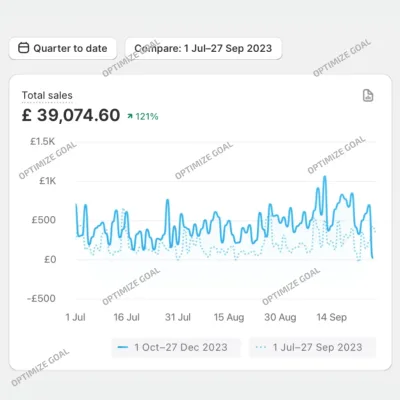
£5K to £39K in four months
Revenue had stalled. We fixed the site experience and launched UGC problem-solution ads — the quarter closed up 121% on the one before.
- 2.5x ROAS
- +121% QoQ

Book a free audit call and we will tell you which lever moves your numbers first.
Book a free auditPaid media, Klaviyo email and SMS, and conversion work run by one team against a single blended target — so nobody can blame the traffic for the conversion rate or the site for the ROAS. Book the free audit and within 48 hours you get the ad, Klaviyo and store fixes worth making first.
30 minutes · Ads, Klaviyo and store in one review · Findings back in 48 hours
Trusted by 50+ D2C brand founders


A Shopify marketing agency runs the full commercial funnel for a Shopify store — paid acquisition, email and SMS retention, and conversion rate work — and is measured on total store revenue against total marketing cost rather than on any single channel's reported return.
Hiring a marketing agency for a Shopify store is different from hiring a media buyer, and the difference is scope, which matters more than it sounds. Paid ads, email and the store itself are three levers on the same number. Push acquisition without fixing conversion and you buy expensive traffic that bounces. Fix conversion without retention and every month restarts from zero. Run email well while the ads chase the wrong customers and the flows have nobody worth nurturing. Split across three suppliers, each optimises its own metric and none owns the outcome.
Held together, the arithmetic changes. Contribution margin on a Shopify store is a function of what you pay to acquire a customer, how many visitors convert, and how much a customer is worth over their lifetime. An agency accountable for all three can trade between them — accept a higher acquisition cost when repeat purchase rate justifies it, or cut spend and invest in conversion when it does not. An agency accountable for only one has to defend that one, whatever the store needs.
In practice the work runs on three tracks concurrently. Paid media across Meta, Google and TikTok, weighted toward whichever channel is paying back rather than split evenly for tidiness. Klaviyo email and SMS covering the flows that do the heavy lifting — welcome, browse and cart abandonment, post-purchase, winback — because flow revenue compounds while campaign revenue is spent the day it is sent. And conversion work on the templates carrying the traffic, so the same spend produces more orders.
All of it reports blended. Meta, Google and Klaviyo will each claim the same order, so their reported returns add up to considerably more revenue than the store actually took. We report total spend against total revenue, alongside new customer acquisition cost and contribution margin, because that is the number that decides whether the business is growing or simply spending more to stand still.
We'd reconcile Meta, Google and Klaviyo against your Shopify orders, check checkout tracking and your flows, and send back the fixes worth making first within 48 hours.
Revenue had stalled. We fixed the site experience and launched UGC problem-solution ads — the quarter closed up 121% on the one before.
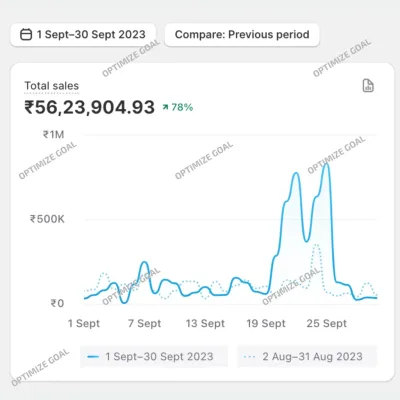
No funnel structure and a flat account. We rebuilt campaigns around a small set of offers and let the winners take the budget.
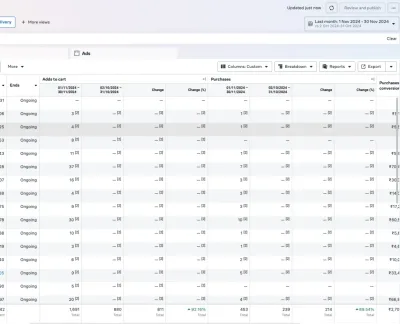
The brand could not scale without losing profitability. The first 30 days of the new funnel lifted adds to cart 92% and purchases 89%.
“A lot of custom development made it difficult to glean accurate insights through Google Analytics. They exceeded our expectations by finding a solution in half the time that other firms quoted us, and did so mostly independently, letting our team focus on the day-to-day.”
Optimize Goal is a Shopify and ecommerce performance marketing agency for DTC brands across the US, UK, and beyond. We run Meta, Google, and TikTok ads, back them with creative and CRO, and report blended ROAS tied to real revenue. As a full-funnel Shopify digital marketing agency, we combine PPC (Google and Meta), retention, and CRO — a single marketing agency for Shopify brands that ties every channel back to profit. Need a dedicated Shopify PPC agency? Our paid search team manages Google Search, Shopping, and Performance Max for Shopify stores end to end.
Your account is run by a senior buyer, never handed off to a junior.
We optimize for blended ROAS and new-customer revenue, not vanity clicks.
An in-house studio feeds your ads with fresh, tested creative every week.
Live dashboards tie every dollar of spend to real Shopify revenue.
One team running every paid channel against a single goal: profitable, trackable revenue for your store.
Full-funnel prospecting and retargeting on Facebook and Instagram, built around creative that converts cold traffic into buyers.
Search, Performance Max, and Shopping campaigns that capture high-intent demand and feed your Shopify catalog.
Native, hook-driven video ads that reach new audiences and drive first-purchase revenue at a profitable CPA.
A creative engine of statics, UGC, and video, tested weekly so your winning ads never run dry.
Conversion-focused landing pages and on-store A/B tests that lift the conversion rate your ads pay for.
Server-side tracking and blended reporting so you know which channel actually drives Shopify revenue.
Paid ads bring the traffic. Klaviyo email and SMS, CRO, and retention make sure it converts and comes back, the full funnel a modern Shopify marketing agency should own.
Klaviyo flows and campaigns that turn first-time buyers into repeat revenue.
On-store A/B testing and CRO so more of your paid traffic converts to sales.
Scroll-stopping statics, UGC, and video, produced and tested in-house.
Post-purchase flows and audiences that grow lifetime value, not just first orders.
We audit your ad accounts, store, and tracking, then show you exactly where revenue is leaking and the size of the opportunity.
You get a channel plan, creative angles, and a spend-to-revenue forecast before a single dollar is committed.
We launch campaigns and run structured creative and audience tests to find profitable winners fast.
We scale what works, kill what doesn’t, and report blended ROAS tied to real Shopify revenue every week.
Deep experience across the categories that win on Shopify, so your strategy starts with proven category data.
One transparent monthly fee. We scale spend only when the numbers justify it.
Most growing Shopify brands end up with an ads agency, an email freelancer and a developer. Here is what that arrangement costs that nobody invoices for.
| What to compare | One team, one target | A supplier per channel |
|---|---|---|
| What each party optimises | Blended profit across the whole funnel | Their own channel's reported metric |
| When results disappoint | One team diagnoses across ads, email and site | Ads blame the site, the site blames the traffic, email blames both |
| Attribution | One blended view reconciled against Shopify orders | Three dashboards claiming the same orders |
| Speed of a fix | A landing page problem found on Monday is fixed the same week | Raised with the ads agency, passed to a developer, scheduled |
| Budget decisions | Moved between channels as payback dictates | Each supplier argues for their own budget to grow |
| Where it fits less well | Brands with a strong in-house team wanting one specialist channel filled | Genuinely deep single-channel expertise on a very large account |
For Shopify and Shopify Plus brands spending at least $15k a month across channels, whose ads, email and store need a single owner.
Get my free Shopify auditHow does Shopify marketing work in practice? The store is the system of record: it holds the catalog, takes the order and fires the conversion event, and every channel reads from it. The Google & YouTube, Facebook & Instagram and TikTok channel apps sync products and install pixels, and where TikTok Shop is available the TikTok app can list your catalog there too. Shopify Email and the built-in automations cover abandoned checkouts and simple campaigns, Shopify Inbox handles live chat, Shopify Collabs manages creator and affiliate partnerships, and discount codes and customer segments sit in the admin. That plumbing is genuinely useful, and it is also where most stores stop. The platform connects the channels. It does not decide what to spend, what to say, or which customers are worth paying for.
The defaults are where the money leaks. The Facebook & Instagram channel only sends server events through the Conversions API at its highest data-sharing level, so a store left on a lower setting is bidding on browser data alone. The Google & YouTube channel is built for launching a Performance Max campaign quickly, not for splitting the feed by margin or keeping branded search out of the results. Shopify Email handles campaigns well enough, but the behavior-triggered flows and segmentation a growing list needs usually end up in Klaviyo. Shopify's own ad products deserve the same scrutiny. Shop Campaigns place your products inside the Shop app and charge only for new customers, while Shopify Audiences, available on Shopify Plus, builds prospecting audiences from purchase signals across Shopify's network for export to ad platforms. Both can help, and both report their own results, so they belong in the same blended new-customer CAC view as every other channel. None of this is broken, exactly. It is configured for a store nobody has looked at closely yet.
That gap is where an agency earns its fee, and it is also why comparing agencies is harder than it looks. Labels do not help much: a Shopify digital marketing agency might run only Meta, while a Shopify store marketing agency might mean anything from ads to theme tweaks. The best Shopify marketing agency for your store is the one whose scope matches where the constraint sits: a paid specialist if the store converts and the ads do not, one team across ads, email and the site if growth resets every month. Whoever you shortlist, ask who owns the blended number when the channels disagree, and ask to see a weekly report before you sign.
Every advertising platform reports on the assumption that it caused the sale. Meta counts a purchase it believes it influenced within its window; Google counts the same purchase if a search touched the journey; Klaviyo counts it if an email was opened first. None is lying, and adding them together produces a revenue figure the store never took. Brands routinely discover their platform-reported revenue exceeds actual sales by a wide margin, and every budget decision built on that gap is wrong in the same direction.
Blended reporting sidesteps the argument. Total marketing spend divided into total store revenue gives a single number that cannot be double-counted, because Shopify only recorded each order once. Tracked over time, blended ROAS — or MER, the same idea inverted — tells you whether adding budget is adding revenue, which is the only question that matters when deciding whether to spend more.
The companion metric is new customer acquisition cost, because blended ROAS on its own can be flattered by retention. A store selling more to existing customers looks efficient while acquiring nobody new, which is a pleasant quarter and a shrinking business. Tracking what it costs to acquire a genuinely new customer, against what that customer is worth over their lifetime, is what separates growth from harvesting.
Email is where Shopify economics are usually rescued, because it is the only channel whose cost does not rise with volume. The distinction that matters is between flows and campaigns. Campaigns are sent once and earn once. Flows run automatically against behaviour and keep earning for as long as they are switched on, which is why a store with well-built flows and no campaign calendar usually outperforms the reverse. It is also why hiring a Shopify email marketing agency separately from the ads team so often disappoints: the flows end up nurturing whoever the ads happened to buy.
A small number of flows do most of the work: welcome for new subscribers, browse and cart abandonment for people who showed intent and stalled, post-purchase to turn a first order into a second, and winback for customers drifting out of their normal cycle. Most stores have some of these in the default form Klaviyo installs, which is a starting point rather than an implementation — untimed, unsegmented, and often still using the template copy.
Segmentation is what separates a list from an asset. A first-time buyer, a repeat customer and someone who has not opened anything in six months should not receive identical messages, and sending to everyone every time trains inbox providers to stop delivering you. SMS sits alongside where it earns its place: high-urgency, low-frequency, and used sparingly, since it is an expensive way to annoy people and a very effective one to recover a cart.
Conversion rate is a multiplier on every marketing dollar, which is why it is usually the cheapest lever available and the last one anyone pulls. Lifting conversion improves the return on ads, email and organic simultaneously and permanently, whereas an ad improvement helps only the ads. For a store already buying traffic, the work that makes that traffic convert better is frequently worth more than the work that buys more of it.
On Shopify the recurring culprits are consistent. Mobile speed, since most sessions are on phones and each app added to the theme has usually made it slower. Product pages that describe features and never address the objection stopping the purchase. Cart and checkout friction — unexpected shipping cost, forced account creation, too few payment methods. And a mismatch between what an ad promised and what the landing page says when someone arrives.
Because we run the ads as well as the store work, that last one gets caught rather than argued about. When a campaign underperforms, the question of whether it is the creative, the audience or the page is answered by the team that owns all three, in the same week — instead of becoming a conversation between an ads agency and a developer who have never spoken and have no shared target.
The Shopify ads service covers paid media specifically — Meta, Google and TikTok run in depth for stores that already have email and conversion handled. This engagement covers the whole funnel: those same ads plus Klaviyo email and SMS and on-store conversion work, run by one team against one blended target. Brands who need acquisition fixed should look at the ads service; brands whose problem is that growth resets every month, or whose channels are fragmented across suppliers, want this one.
Shopify helps with the plumbing. Its sales-channel apps connect your catalog and pixels to Google, Meta and TikTok, Shopify Email and marketing automations handle simple campaigns and abandoned checkouts, and the admin reports sessions, orders and conversion rate. What it does not do is set budgets, write creative, build segmented Klaviyo flows or reconcile what each platform claims. Plenty of stores run well on the built-in tools for a while. An agency earns its fee once paid spend is large enough that small efficiency gains are worth more than the retainer.
Yes, and for most stores it is where the fastest margin improvement sits. That covers the flows doing the heavy lifting — welcome, browse and cart abandonment, post-purchase, winback — plus segmentation, campaign calendar and SMS where it genuinely adds something rather than duplicating email. Flow revenue compounds because it runs automatically against behaviour, which is why we build flows properly before worrying about the sending schedule.
For most growing Shopify brands, Klaviyo, and it is the platform we build in. Shopify Email is native and simple, which suits a store sending straightforward campaigns to a modest list, but its segmentation and flow logic are basic by comparison. Omnisend sits between the two, with capable automation and SMS, and works for stores with uncomplicated needs. Klaviyo earns its higher cost once segmentation by purchase behavior, predictive fields such as expected next order date, and branching flows start carrying real revenue. If one of the others is working for you, switching is not automatically the right call.
Blended. Total marketing spend against total Shopify revenue, plus new customer acquisition cost and contribution margin where you can share cost data. Platform figures are shown because bidding runs on them, but they are treated as inputs rather than results — Meta, Google and Klaviyo will each claim the same order, so their combined reported revenue always exceeds what the store actually took. You get a weekly written report and a live dashboard you can open whenever you want.
Against Shopify's own order data rather than the platforms'. The headline figure is blended ROAS: total store revenue over total marketing spend. Behind it sit new customer acquisition cost, to confirm growth is not just existing customers buying again; repeat purchase rate and Klaviyo flow revenue, to confirm retention is compounding; conversion rate on the templates carrying the traffic; and contribution margin wherever you share cost data. Success is those numbers improving together. A month where blended ROAS rises while new customer acquisition cost climbs is harvesting, not growth.
Meta, Google and TikTok on the paid side, Klaviyo for email and SMS, and conversion work on the store itself. Budget is weighted toward whichever channel is paying back rather than split evenly, and that weighting changes as the numbers change. We do not run every channel that exists — if the honest answer for your store is that a channel is not worth entering yet, we will say so rather than adding a line item.
Full-funnel management makes sense once spend is high enough that improving its efficiency is worth more than the management fee. Below that threshold the audit usually identifies tracking fixes, flow gaps and conversion problems worth more than ongoing management would be, and we would rather hand you that list than take a retainer that eats the budget it is meant to improve. The free audit will tell you which situation your store is in.
Our playbooks, tracking setups and conversion work are built specifically around Shopify and Shopify Plus, which is where the depth is. We do run paid media for brands on other platforms through our broader ecommerce marketing engagement, but if you are on Shopify you benefit from the platform-specific work — checkout-accurate tracking, theme-level conversion changes, and app stack decisions — that a platform-agnostic agency has to treat as somebody else's job.
Your store keeps selling throughout, so the useful question is when the changes show up in the numbers. Audit findings come back in 48 hours. Tracking corrections and quick conversion fixes tend to show inside the first two weeks, because they change what is measured and what visitors see immediately. Rebuilt Klaviyo flows usually start contributing within the first month, since they run against behavior that is already happening. Paid restructure and creative testing take longer to read clearly, across days 30 to 60.
Yes, both are in-house. Statics, UGC and video for paid social, tested weekly so winners are found by process rather than instinct, and the email and SMS copy and design for Klaviyo flows and campaigns. Having creative and media buying in one team matters more than it used to, because on paid social the creative is effectively the targeting — the ad decides who the algorithm goes looking for.
Yes, and it is a normal arrangement. Where you have a developer you trust, we hand over specified conversion work rather than insisting on doing it ourselves. Where you have an agency running one channel well, we can take the rest. What we would flag honestly is that split ownership is where accountability tends to leak, so it is worth agreeing up front who owns the blended number when the channels disagree about whose fault a bad month was.
A development agency builds and maintains the store — themes, code, integrations, speed. A Shopify marketing agency drives and converts traffic to it. They meet at conversion rate, which is why we do both: the store work our marketing surfaces as necessary is handled by the same senior team rather than raised as a ticket for someone else. If you need a build or a replatform rather than growth, our Shopify development service is the right starting point.
A Shopify agency is a team that specializes in stores built on Shopify, and the label covers several trades: theme and app developers, Shopify Plus migration specialists, CRO shops and marketing agencies. Most are strong at one. Hire for the constraint you actually have. A broken theme or a replatform needs developers; a store that converts but cannot grow profitably needs a digital marketing agency for Shopify that owns ads, email and the site together. Shopify's Partner Directory is a reasonable place to start a shortlist, and the free audit call is a quick way to test how we think.
Nothing moves, because nothing was ever held by us. Your ad accounts, Klaviyo account, Shopify store and analytics properties are all in your name with you as owner throughout. Flows, audiences, creative and documentation stay where they are and remain yours to use. We work month to month with no lock-in, on the basis that the work should be worth renewing rather than difficult to leave.
That is usually where the largest gain is, and it is the half most acquisition-only agencies never touch. Repeat purchase rate is a lever on what you can afford to pay for a new customer: raise it and a higher acquisition cost becomes rational, which opens up audiences your competitors cannot afford. The work is post-purchase flows, replenishment timing matched to actual consumption cycles, segmentation by purchase behaviour, and winback before a customer has genuinely gone.
Yes. We work with DTC Shopify and Shopify Plus brands across the US, UK and other English-speaking markets. Where a brand sells into several regions, currency, market settings and channel mix are handled per market rather than assumed to be identical — what performs on Meta in the US frequently does not transfer directly to the UK, and the reporting should separate them rather than average them into one misleading number.
Very little. Before the 30-minute call, give us view access to your ad accounts, Klaviyo and Shopify analytics, and tell us roughly what an order costs you to fulfill, which lets us talk about contribution margin rather than platform ROAS. Nothing needs tidying first, because the mess is usually what we are looking for. Findings come back within 48 hours, and they are yours to keep whether you hire us, hand them to your developer, or take them to another Shopify marketing company.
Yes. We focus exclusively on Shopify and Shopify Plus brands, so our tracking, creative, and landing-page playbooks are built for the platform.
You’ll get audit findings in 48 hours. Most accounts see meaningful movement in profitable spend within the first 30 to 60 days.
We set up server-side tracking and report blended ROAS tied to actual Shopify revenue, not just in-platform numbers that overstate results.
No lock-in. We work month to month because we’d rather earn your business with results than hold it with a contract.
Yes. Our in-house team produces statics, UGC, and video, and tests new creative every week so winners keep scaling.
Yes. Beyond paid ads we run Klaviyo email and SMS, conversion rate optimization, and creative, so the whole funnel works together.
Senior buyers on every account, weekly in-house creative testing, profit-first optimization, and transparent reporting, with no lock-in contracts.
Thirty minutes with a senior strategist, not a salesperson. You leave with the first three things we would change — and you decide what happens next.