Hair care · Shopify
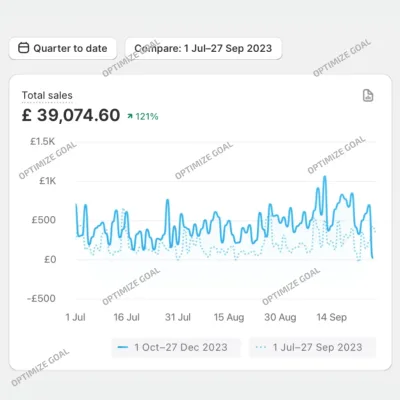
£5K to £39K in four months
Revenue had stalled. We fixed the site experience and launched UGC problem-solution ads — the quarter closed up 121% on the one before.
- 2.5x ROAS
- +121% QoQ

Book a free audit call and we will tell you which lever moves your numbers first.
Book a free auditSenior developers build every store — custom themes, migrations, Shopify Plus and custom apps — in clean Liquid your team can extend, on a fixed scope with a staging link you can open anytime. Book a free 30-minute scoping call and within 48 hours you have a fixed quote and project plan, including what your store should not spend money on yet.
30 minutes · Fixed scope, never hourly · Quote and project plan within 48 hours
Trusted by 50+ D2C brand founders


A Shopify development agency is an ecommerce build partner that designs, develops, migrates and maintains stores on Shopify and Shopify Plus, covering theme development, custom apps, third-party integrations and ongoing performance work with one team.
“Shopify agency” gets used for ad buyers, email specialists and theme resellers alike; a Shopify development agency is the narrower kind that writes, ships and owns the code. The work splits into four jobs. Build: a custom theme or a new store, coded in Liquid on Online Store 2.0. Move: replatforming from WooCommerce, Magento, BigCommerce, Wix or WordPress without losing products, data or rankings. Extend: custom apps, private integrations and checkout work on Shopify Plus. Maintain: Core Web Vitals, fixes, features and conversion work after launch. A freelancer usually sells one of the four. An agency sells all four and owns the seams between them, which is where projects actually fail.
At Optimize Goal every build is led by a senior Shopify developer and never handed to a junior. You get a fixed scope before work starts, a live staging store you can open at any time, structured QA across devices and browsers, and documented code your in-house team can pick up later. That last part matters more than it sounds. Most stores we are asked to rescue are not badly designed — they are badly documented, and the brand cannot change one section without paying an outsider to decode it.
Speed is the part founders underestimate. Every extra second of load time costs conversions, Core Web Vitals feed straight into how Google ranks your store, and a slow product page taxes every ad dollar you spend getting someone to it. We hold a performance budget on every template and target a sub-one-second LCP on builds, so the store is still fast six months after launch rather than only on demo day. Speed is a theme architecture decision, not a plugin added afterwards.
The commercial answer: most custom builds run $5,000 to $75,000 depending on complexity, enterprise Shopify Plus projects can go higher, and ongoing development retainers start at $3,000/month. You get a fixed quote before any work begins and a project plan within 48 hours of the first call. Ranges are typical industry figures for context; your number depends on scope, integrations and timeline. Nothing is billed hourly — the scope you sign is the invoice you receive.
On the call we look at your theme, apps and Core Web Vitals, say whether you need a rebuild, a migration or a focused fix, and send a fixed quote within 48 hours.
Revenue had stalled. We fixed the site experience and launched UGC problem-solution ads — the quarter closed up 121% on the one before.
“A lot of custom development made it difficult to glean accurate insights through Google Analytics. They exceeded our expectations by finding a solution in half the time that other firms quoted us, and did so mostly independently, letting our team focus on the day-to-day.”
Optimize Goal is a Shopify and Shopify Plus development agency for DTC brands across the US, UK, and beyond. We build custom themes, headless storefronts, and custom apps, and back every build with rigorous QA and conversion-focused engineering. As a full-service Shopify web development company, we cover everything from theme customization to headless Hydrogen storefronts.
Your build is led by a senior Shopify developer, never handed off to a junior.
We engineer every store for speed and conversion, not just how it looks in a demo.
We write tidy, well-documented Liquid and code your team can extend later.
Fixed scopes, clear milestones, and a staging link you can review anytime.
One senior team handling every part of your build, from custom theme to launch, against a single goal: a fast, reliable store that converts.
Bespoke Shopify themes built from your designs (or ours), pixel-perfect, fully responsive, and tuned for conversion.
New store builds and seamless migrations from WooCommerce, Magento, or BigCommerce, with no lost data or SEO.
Enterprise Shopify Plus builds with checkout extensibility, Shopify Functions, B2B, and custom scripts for high-volume brands.
Custom Shopify apps and private integrations that add the exact functionality your store needs, built on the latest APIs.
Blazing-fast headless storefronts on Hydrogen and Oxygen for brands that need full control over the front end.
Core Web Vitals tuning, code clean-up, and on-store A/B tests that lift your conversion rate and search rankings.
Shopify and Shopify Plus Partner, building to platform best practices.
Semantic Liquid and modern JS, built for Online Store 2.0 and beyond.
We integrate Klaviyo, Recharge, Gorgias, Yotpo, and your wider stack.
Launching the store is the start. Maintenance, new features, integrations, and performance work keep it fast and stable, the full lifecycle a modern Shopify development agency should own.
Retainer support, bug fixes, and updates so your store never falls behind.
ERPs, 3PLs, subscriptions, and APIs wired cleanly into your Shopify store.
On-store A/B testing and UX fixes so more of your traffic converts to sales.
Ongoing Core Web Vitals and speed work that protects rankings and revenue.
We dig into your goals, designs, and current store, then send a fixed-scope quote and project plan, usually within 48 hours.
You get wireframes, a technical plan, and a build timeline before a single line of code is written.
We build on a staging store you can review, with structured QA across devices and browsers before anything goes live.
We launch with a full pre-flight checklist, then stay on for support, fixes, and new features as you grow.
Apparel brand, full custom theme rebuild
Supplements brand, Shopify Plus migration
Beauty brand, Magento → Shopify Plus
Home goods brand, headless Hydrogen build
Jewelry brand, speed & Core Web Vitals
Food & bev brand, custom checkout extensions
We replatform stores of every size to Shopify and Shopify Plus, with a proven process that protects SEO, preserves data, and improves speed. As an experienced Shopify migration agency, we replatform stores from WooCommerce, Magento, and BigCommerce with full URL mapping so you keep your rankings.
Move from WooCommerce to Shopify or Shopify Plus with no lost data, products, or SEO rankings.
Move from Magento to Shopify or Shopify Plus with no lost data, products, or SEO rankings.
Move from BigCommerce to Shopify or Shopify Plus with no lost data, products, or SEO rankings.
Move from Wix to Shopify or Shopify Plus with no lost data, products, or SEO rankings.
Move from Squarespace to Shopify or Shopify Plus with no lost data, products, or SEO rankings.
Move from WordPress to Shopify or Shopify Plus with no lost data, products, or SEO rankings.
Deep experience across the categories that win on Shopify, so your build starts with proven category patterns.
Most custom builds run $5,000 to $75,000 depending on complexity; enterprise Shopify Plus projects can go higher. You always get a fixed quote before any work begins.
Bespoke, conversion-focused theme from your designs, typically 3 to 6 weeks.
New build or replatform to Shopify or Shopify Plus with data and SEO preserved.
Retainer for features, fixes, integrations, and speed work as you grow.
One transparent monthly retainer for ongoing Shopify development, with a senior team on call.
Both can build a Shopify store, and for small, well-defined work one of the many Shopify developers for hire is usually the better buy. The difference shows up in who covers QA, who answers when checkout breaks on a Friday, and what the code looks like a year later.
| What to compare | Shopify development agency | Freelance Shopify developer |
|---|---|---|
| Who writes the code | A senior Shopify developer leads the build, with design and dedicated QA behind them | One person covering design, code and testing, usually across several clients at once |
| Pricing model | Fixed-scope quote agreed before work starts; retainers from $3,000/month after launch | Hourly or day rate, so scope creep and rework land on your invoice, not theirs |
| QA and testing | Structured QA across devices and browsers on a staging store you can review anytime | Testing depends on one person's remaining time and the devices they happen to own |
| Migration risk | 301 redirect mapping, metadata preserved, Search Console verified after cutover | Often quoted as an export and import, with SEO treated as somebody else's scope |
| If something breaks | A team plus a named project lead — holidays and illness do not stop the project | A single point of failure: one person unavailable means the store waits |
| After launch | Support window, then an optional retainer for features, integrations and speed work | Support depends on whether they still have capacity when you call |
| The code you inherit | Documented, maintainable Liquid your team or the next agency can extend | Varies widely; undocumented code is the most common reason rebuilds get quoted twice |
For DTC brands whose Shopify store is their main revenue channel and who have a rebuild, migration or custom app on the roadmap.
Get my fixed-scope Shopify quoteMost stores start on a premium template and outgrow it. The symptoms are consistent: three apps injecting scripts into one section, a homepage only a former contractor understood, and a mobile product page that loads slowly because the template ships every feature whether you use it or not. A Shopify theme development agency rebuilds that as a bespoke theme carrying only the code your store actually runs, which is why a good custom theme is usually faster than the template it replaced before any dedicated speed work begins.
Custom does not mean starting from zero. We build on Online Store 2.0 with sections and blocks, so your merchandising team can assemble landing pages without opening a ticket, and we keep the Liquid semantic and documented. Most custom themes ship in 3 to 6 weeks. If your designs exist in Figma we build straight from them; if not, our team handles design too. The output is a theme with a performance budget on every template, not a demo that degrades once real product data lands in it.
The honest counter-case: if your catalogue is small, traffic is modest and the template mostly works, a custom theme is not your highest-return spend. Targeted speed work, stronger product pages and conversion testing usually pay back sooner. Any Shopify development agency that opens with a rebuild pitch before looking at your analytics is selling a project rather than making a diagnosis. We will say so on the scoping call, and quote the focused fix instead.
Custom Shopify development agency services start where the app store stops. Bundles priced by rule, B2B customers with their own catalogue and terms, an ERP that must know stock levels within the minute, a subscription flow no off-the-shelf app can model — these need a custom app or a private integration on current Shopify APIs. As a Shopify app development agency we build both public and private apps, and we are equally willing to remove app bloat: several apps we have replaced cost more in load time than they returned in features.
Headless is the other question founders ask. We build headless storefronts on Hydrogen and Oxygen, and for brands with genuinely custom front-end requirements they are the right call. For most stores they are not: a well-built Online Store 2.0 theme ships sooner, costs less to maintain and reaches a comparable Core Web Vitals result. We recommend whichever fits your roadmap rather than whichever bills more hours, and we put that recommendation in writing during scoping.
Integrations are where builds leak time, so we scope them explicitly. Klaviyo, Recharge, Gorgias and Yotpo are routine. ERPs, 3PLs and custom APIs each get their own line in the quote and their own QA pass, because wiring it all up at the end is how launch dates slip. Analytics counts as an integration too: GA4, ad pixels and checkout events are verified before launch, so your marketing team starts with clean data instead of debugging attribution in month two.
After launch, most brands are better served by a senior Shopify team on call than by a full-time hire. That is what the development retainer is: from $3,000/month it covers new features and sections, fixes, integrations as your stack changes, and the Core Web Vitals work that stops a fast store drifting slow. Treat it as a fractional Shopify team that already knows your codebase, so a broken checkout or a new campaign landing page does not start with re-briefing an outside developer. It carries no lock-in.
The largest risk in any replatform is search traffic, and it is the one most quotes gloss over. A Shopify ecommerce development agency should show you the redirect map before the migration, not after it. We export every indexed URL, map 301 redirects one to one, preserve titles, metadata and structured data, keep collection and product URL structures where they carry equity, and verify Search Console after cutover. Full migrations and Shopify Plus builds typically run 8 to 16 weeks depending on integrations.
We replatform from WooCommerce, Magento, BigCommerce, Wix, Squarespace and WordPress. Data integrity gets the same treatment as URLs: products, variants, customers, order history, reviews and subscription records are mapped, then reconciled against the source before the old store goes dark. Reviews in particular are quietly load-bearing — losing them costs conversion rate immediately, and no redirect brings them back. The build sits on a staging store you can open at any time, so nothing about cutover day is a surprise.
We build for DTC brands across the US, the UK and other English-speaking markets. UK teams tend to ask about conversion rate optimisation while US teams write optimization; the work is identical, and on a migration it starts the day the redirect map is signed off. A faster store earning more from the same traffic is the cheapest revenue in the project, which is why speed and conversion work sit inside the migration scope rather than being sold back to you afterwards.
Start with how the shortlist gets built. A search for Shopify experts or a Shopify agency returns freelancers, theme shops, app vendors and full-service agencies in one undifferentiated list. A ranked article naming the best Shopify development agency, or the top Shopify development agency in the USA, is a longlist rather than a verdict until you know how its order was decided. Filter by the job first — a theme rebuild, a replatform and a custom app lean on different skills — and ask each shop which of the three it shipped most recently.
Shopify design and development agency reviews are worth reading, but read them for pattern rather than star rating. Look at what reviewers say about what happened after launch, whether scope moved mid-project, and whether the next developer could work with the code left behind. Check the Shopify Partner Directory listing, then ask for two references you can actually call — ideally including one project that went sideways — and ask what the team did about it. Any agency worth hiring hands those over without friction.
Then ask four technical questions on the call. Who specifically writes the code, and are they senior? Can I see a staging link during the build? Is the quote fixed scope or hourly? What is documented at handover, and do I own all of it? The answers separate a Shopify developer agency that hands you an asset from one that hands you a dependency. A shop that will not show code, or will not put scope in writing, has already answered you.
Finally, judge the diagnosis rather than the deck. Ask what they would do first on your store and why, then check whether the answer references your analytics, your Core Web Vitals or your product pages — or whether it is the same rebuild pitch everyone gets. Our scoping call ends with a fixed-scope quote and a project plan within 48 hours, including the parts we think you should not spend money on yet. That is cheaper than testing an agency with a contract.
Hiring a Shopify development agency typically costs $5,000 to $75,000 for a custom build, depending on complexity, and enterprise Shopify Plus projects can go higher. Ongoing development retainers start at $3,000/month. Ranges are typical industry figures for context — your exact quote depends on scope, integrations and timeline. Every project is quoted as fixed scope before work begins, so there is no hourly meter and no surprise invoices, and you get a project plan within 48 hours of the discovery call.
Shopify development agency cost is set by scope far more than by rates. The biggest drivers are how much of the theme is custom, how many integrations need building (ERPs, 3PLs and custom APIs each get their own line in the quote), whether a migration is involved, and whether the store runs on Shopify Plus. That spread is why most custom builds land anywhere from $5,000 to $75,000. Phasing the build or deferring an integration is usually the cleanest way to bring a quote down without cutting QA.
A Shopify build takes 3 to 6 weeks for most custom themes. Full migrations and Shopify Plus projects usually run 8 to 16 weeks depending on how many integrations are in scope. You get a milestone schedule up front and a staging store you can open at any time, so progress is something you watch rather than something you are told about. The timeline is fixed in the same quote as the price and moves only if you change scope.
Hire a freelance Shopify developer for small, well-defined tasks: one section, one bug, a template tweak. Hire a Shopify development agency when a failed build or a botched migration would cost real revenue — you get a senior developer plus design, dedicated QA, a named project lead and support after launch instead of a single point of failure. The agency premium buys redundancy and documentation. If your store is your main revenue channel, that redundancy is what you are paying for.
Match the agency to the job before comparing prices: theme rebuilds, replatforms and custom apps lean on different skills. On the call, ask who writes the code and how senior they are, whether you get a staging link during the build, whether the quote is fixed scope or hourly, and what is documented at handover. Read reviews for patterns rather than stars and call two references. Then hire the team whose diagnosis mentions your analytics, Core Web Vitals and product pages instead of a stock rebuild pitch.
A Shopify dev agency is worth it when the build has to hold up under real traffic and real money, not when you need a section swapped. Below a certain scale, targeted speed work, stronger product pages and conversion testing usually return more than a full custom theme. We say so on the scoping call when that is the honest answer, and scope the smaller job instead. A fixed-scope quote lets you compare what each option costs before committing.
A Shopify developer agency owns the code, the integrations and what happens after launch; a design studio typically owns the visuals and hands the build to somebody else. The seam between those two is where most projects lose time and money. We cover both — bring your own Figma files or have our team design the store — but either way one team is accountable for the store being fast, tested and maintainable, not only for how it looks.
Migrating to Shopify without losing SEO is a process rather than a promise: we export every indexed URL, map 301 redirects one to one, preserve titles, metadata and structured data, and verify Search Console after cutover. We replatform from WooCommerce, Magento, BigCommerce, Wix, Squarespace and WordPress, with products, customers, order history and reviews reconciled against the source before the old store goes dark. You see the redirect map before cutover, not after it.
We build custom Shopify apps, public and private, on current Shopify APIs, for functionality off-the-shelf apps cannot cover cleanly: rule-based bundles, B2B catalogues and pricing, ERP and 3PL sync, and subscription flows that do not fit a standard app's model. Shopify app development services are scoped and quoted exactly like everything else here — fixed scope, agreed before work starts. We are equally willing to remove apps that cost more in load time than they return.
Partly. Which of Shopify's native B2B features you get depends on your plan, and the full set — company accounts, customer-specific catalogs, price lists and payment terms — is what our Shopify Plus development agency page covers. On standard Shopify, wholesale can also run on a custom app or private integration: rule-based pricing, a gated wholesale catalog and ERP sync for stock and orders. That holds up at modest volume. Once wholesale becomes a real channel, native B2B is usually the cleaner long-term home, and the scoping call is where we compare the two.
Speed on a Shopify store is built in rather than added later: we hold a Core Web Vitals performance budget on every template and target a sub-one-second LCP on builds. In practice that means no page-builder bloat, no script-tag graveyard left by abandoned apps, and images and fonts handled properly instead of delegated to a plugin. Fast stores convert better and rank better, and speed is checked at QA rather than assumed.
Shopify web development and theme development overlap heavily and we handle both: storefront design, template architecture, front-end build and Core Web Vitals work. If your project is mainly storefront design and page speed, our Shopify web development agency page covers that scope in more detail. If it is a theme rebuild, a migration, a custom app or Shopify Plus work, this is the right page. The scoping call establishes which one you need before anything is quoted.
For a Shopify website development agency, full-service should mean one team is accountable from scoping through to post-launch support: design, Liquid development, app and API integration, migration, QA, analytics setup and ongoing performance work. In practice it often means several subcontractors and a project manager relaying messages between them. Ask who writes the code and who you call when checkout breaks. Here you work with a dedicated project lead plus the senior developer on your build.
We are a Shopify growth agency and a development team in the same building, and that changes what gets built: the people who would later run your paid media and conversion work sit in the scoping call, so tracking, landing page architecture and product page structure are designed for the traffic you intend to buy. Development, CRO and paid media stay separate engagements and you can hire any one alone — but a build that ignores acquisition usually needs redoing.
You own the code, the store and every account involved. Everything is built inside your own Shopify organization, documented at handover, and written so your in-house team or the next agency you hire can extend it. We do not use proprietary frameworks that force you to come back to us for future changes. The most common reason a rebuild gets quoted twice is undocumented code from a previous developer, so documentation is a deliverable rather than a favor.
Yes. Inheriting a store is a normal starting point, and the first step is a technical review of the theme, apps and integrations as they stand: what is custom, what has been patched, which uninstalled apps left code behind, and what nobody documented. From that we tell you whether the existing code is worth building on or whether a rebuild is cheaper in the long run, then quote the chosen path as fixed scope. You get documentation of what we found either way, so the store stops depending on whoever built it last.
Shopify design and development agency reviews are most useful read for patterns rather than scores: what reviewers say about scope changes, communication during the build, and what happened after launch. Check the Shopify Partner Directory listing, then ask the agency for two references you can call, ideally including one project that went sideways, and ask what they did about it. Testimonials on an agency's own page are the weakest evidence available to you.
After launch every build ships with a support window, and most brands stay on a retainer for new features, integrations, fixes and ongoing speed work, starting at $3,000/month. Launch is the start of the store's life, not the end of the project: apps get added, campaigns need new landing pages, and Core Web Vitals drift when nobody watches them. There is no lock-in on the retainer — it continues because your roadmap does.
The scoping call takes 30 minutes and costs nothing. We ask what the store needs to do that it cannot do today, look at your current theme, apps and Core Web Vitals, and talk through integrations and any planned migration. You leave with a view on whether you need a rebuild, a replatform or a smaller fix, and within 48 hours you get a fixed-scope quote and project plan. There is no pitch and no obligation, and if the right move is to spend nothing yet, we tell you.
No. A link to your store and a rough sense of what is not working is enough to start, because working out the scope is the point of the call. If you have Figma files, a feature list, an app inventory or a migration deadline, bring them, since they sharpen the quote. Brands without designs can have our team handle design as part of the build, and the fixed-scope quote that follows spells out exactly what is and is not included.
Yes. We focus exclusively on Shopify and Shopify Plus, so our themes, apps, and integrations are built specifically for the platform.
Most custom builds start around $5,000 and scale with complexity. Ongoing development retainers start at $3,000/month. You get a fixed quote before any work begins.
Yes. We build for Core Web Vitals and clean, semantic markup, so your store loads fast and stays search-friendly out of the box.
Yes. Most builds are quoted as fixed-scope projects so you know the cost upfront. Ongoing work runs on a flexible monthly retainer.
Yes. We build from your Figma or design files, or our team can handle design too. Either way you get a pixel-perfect, conversion-focused build.
Yes. We migrate from WooCommerce, Magento, BigCommerce, and others to Shopify or Shopify Plus, with no lost data, products, or SEO.
Yes. We build for DTC Shopify and Shopify Plus brands across the US, UK, and other English-speaking markets.
Senior developers on every build, clean and maintainable code, conversion and speed engineered in, full QA, and post-launch support, with fixed-scope quotes.
We build to accessibility best practices (semantic markup, contrast, keyboard navigation) and can run an accessibility audit on your existing store to identify and fix issues.
You work with a dedicated project lead plus the senior developer on your build, with a live staging store and clear milestones so you always know the status.
Yes — we have experienced Shopify Hydrogen developers for headless builds where performance and custom UX matter. For most stores, a well-built Online Store 2.0 theme is faster to ship and easier to maintain, and we'll recommend whichever fits your roadmap.
Thirty minutes with a senior strategist, not a salesperson. You leave with the first three things we would change — and you decide what happens next.